Advert


How to design housing for the unpredictable
Improving the spatial flexibility of buildings seem to have been overlooked in the toolkit for increasing the sustainability of our built environment, argues professor Karin Krokfors.
CORRECTLY PHASED QUESTIONS are essential when we seek to influence the object or topic being examined or the development thereof. We are living amidst a number of coinciding environmental and social crises, and the urgency of solving them is unprecedented. In this situation, many meaningful questions may be sidelined or remain completely “off-radar”, particularly in cases where the impacts are indirect, appearing in the long term, or difficult to grasp.
One such pivotal but less-discussed question in architecture has to do with the spatial sustainability of the built environment, which is to say its ability to adapt to changes over time. This aspect of sustainability is affected by a number of factors, but it is currently being examined largely from the material perspective alone. For example, great expectations are placed on the reuse of reclaimed building materials and structures, but this alone is not a sufficient response to the sheer scale of the crises that the world is experiencing. On the other hand, if we pursue diversity in the urban structure solely through producing varied types of housing, we run the risk that, in a few decades, the buildings may represent the wrong distribution of dwelling sizes and purposes, unless they can be modified and adapted. Such narrow perspectives can even perpetuate the current trend in which buildings are torn down at the average age of fifty years because of an inability to adjust them to meet changing needs in a resource-efficient manner.
When it comes to the goal of prolonging the life cycle of buildings, anticipating future needs is difficult, as it is all but impossible to predict reliably what is going to happen even ten years from now. Buildings should, therefore, be perceived not as end products but as continuously changing processes – a premise that should also inform their design. From the perspective of spatial sustainability, the flexibility and adaptability of buildings emerge as essential prerequisites for extending their life span.
From Narrow Definition of Flexibility towards Systemic Worldview
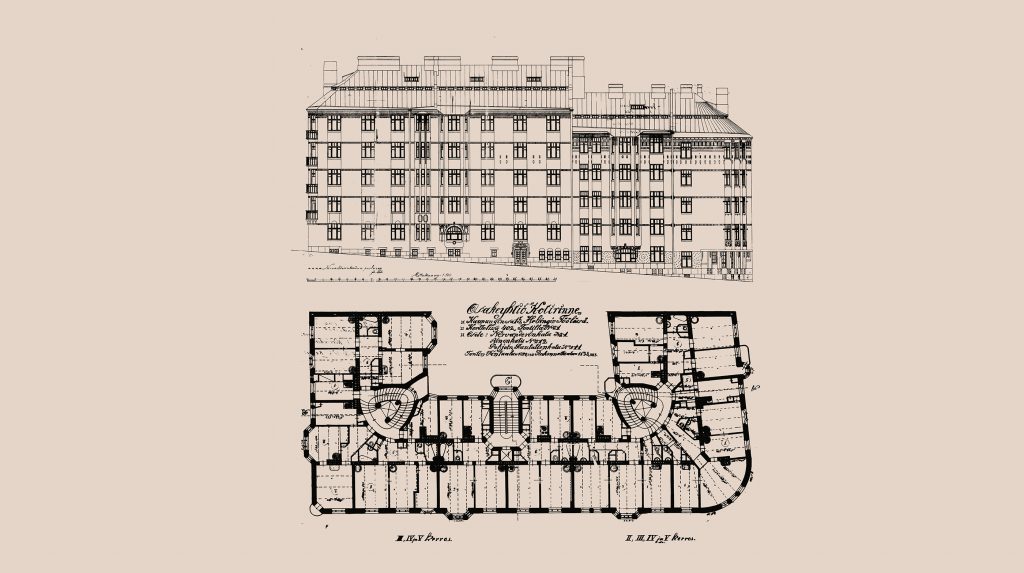
There have been conscious efforts to develop flexible building solutions since the early 20th century, and even earlier, but the aims behind the early solutions often remain more obscure. Some of the solutions emphasise the flexibility of building and others the flexibility of use, but what they typically share is that they all work with and around existing building and designing conventions and are limited to specific perspectives. A typical example would be limiting the concept of flexibility to only apply to what is inside a dwelling. These are likely among the reasons why flexible solutions have not been more widely adopted in construction – they are simply not perceived to be relevant enough. Moreover, the internal logic within the construction sector does not incentivise innovations because the most profitable business model is to repeat the familiar operations for which the production processes were originally developed.
The current situation gives architects a new kind of justification and opportunity to engage in development work, which has, after all, always been at the core of the profession. On the other hand, envisioning the future also has its own controversial history. The modernist legacy of simplifying solutions that were born out of a desire for efficiency led to one-dimensional cities and social problems. The consequences can be seen in, for instance, the built heritage of suburban developments, which are still undergoing extensive renovations, or being demolished and redeveloped. This highlights the need to develop new solution models with manifold impacts from the long-term perspective, with due consideration for future generations.
When looking for new development paths, asking more impactful questions, and broadening perspectives, it is important to adopt a systemic mindset. Instead of optimising specific parts of a building, a systemic mindset examines larger wholes and seeks to understand the interdependencies and mutual effects between things. The industry, however, continues to rely heavily on linear and mechanistic processes in which the ability to determine and understand the problems, as well as the suggested solutions, are limited in their scope and effectiveness, which steers the long-term development away from truly sustainable solutions. A mere fine-tuning of existing solutions is not enough, and we should rather focus on redefining key concepts, objectives and operational models.
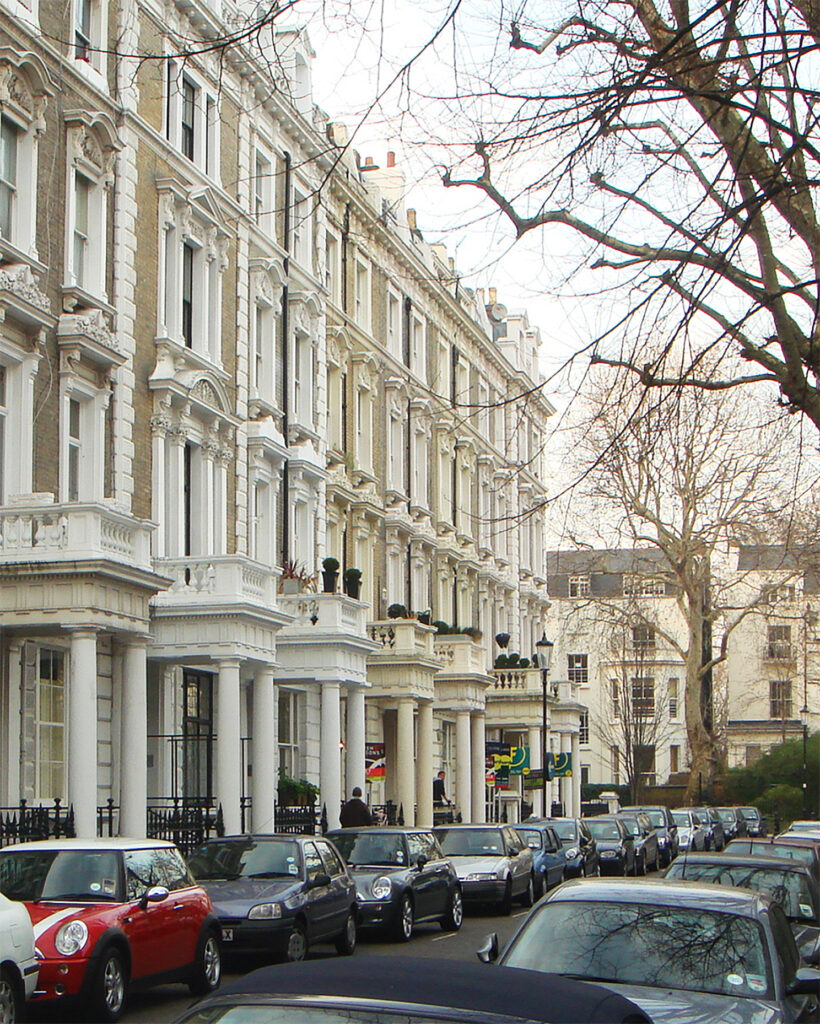
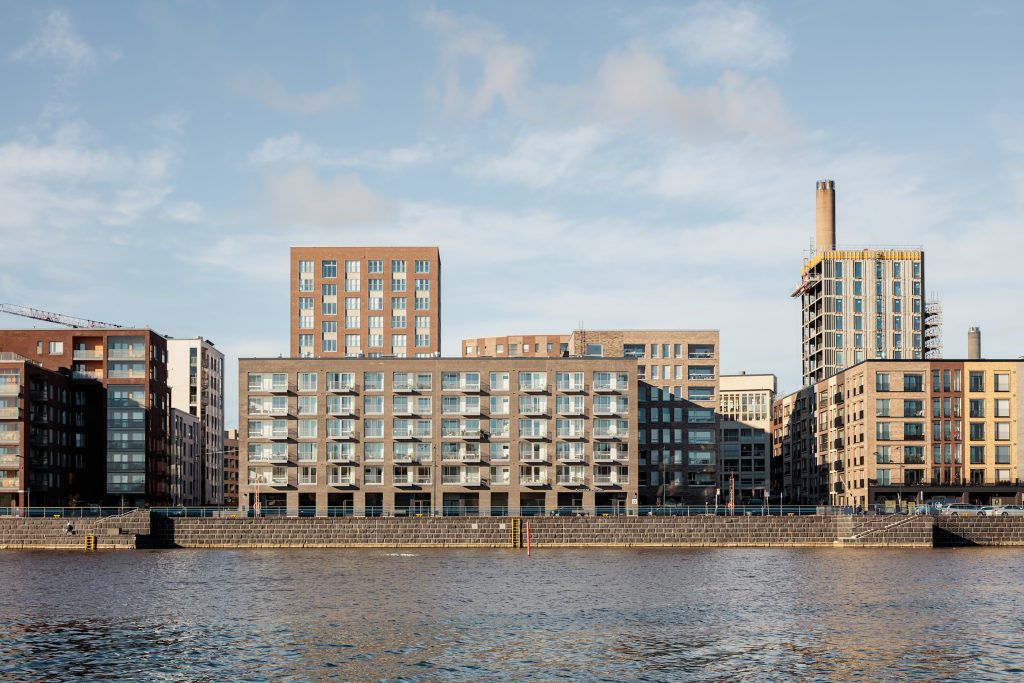
The adaptability of buildings also enhances the sustainability of the urban fabric.
From Anticipation to the Creation of Possibilities
Resilience thinking, grounded in systems thinking, helps us understand how to operate and succeed in a complex world of interconnectedness. Systems are never static, but rather constantly learning, evolving and adapting. In my doctoral dissertation, completed in 2017, I applied resilience thinking within a spatial framework. In order to promote the spatial resilience of the built environment through architectural design, it is important to consider its many different aspects simultaneously:
1. Long-term Flexibility
Not all forms of flexibility promote sustainability in similar ways. Predicting future needs is impossible due to the complexity of the systems and the accelerating pace of the changes. The solutions appear in a very different light based upon whether the primary objective is to achieve immediate benefits or to pursue far-reaching solutions that will lend themselves to diverse uses in the future – including ones that we cannot even be aware of during the design phase.
2. Self-organising Nature of Systems
As regards resilience, it is essential to understand the self-organising, and thereby regenerating, nature of systems. Buildings and spaces are self-organising when they are easily adaptable, often in a user-oriented fashion, to varied unforeseen uses. Our current conception of resilience is evolutionary in nature: a system is under constant, endogenous change, even without an external impulse. This is why the idea of a reset and a return to the starting point – after a natural disaster or a surprising shift in the market, for example – is not in line with the true nature of systems.
Donella Meadows, who was one of the early systems theorists and an environmental scientist, has described the process of influencing systems as dancing with them. We cannot predetermine the future conditions of a system, but we can steer its development towards a more sustainable path. A key question is, therefore, how we can design for the unforeseen in a sustainable manner and facilitate the constantly regenerative nature of buildings.
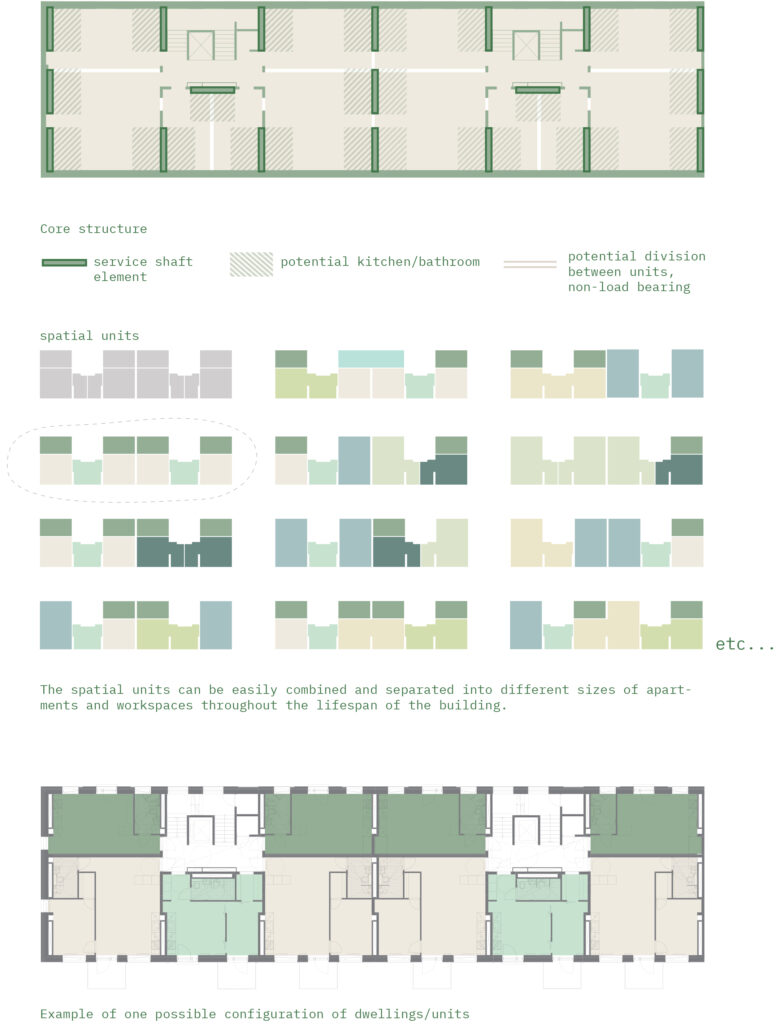
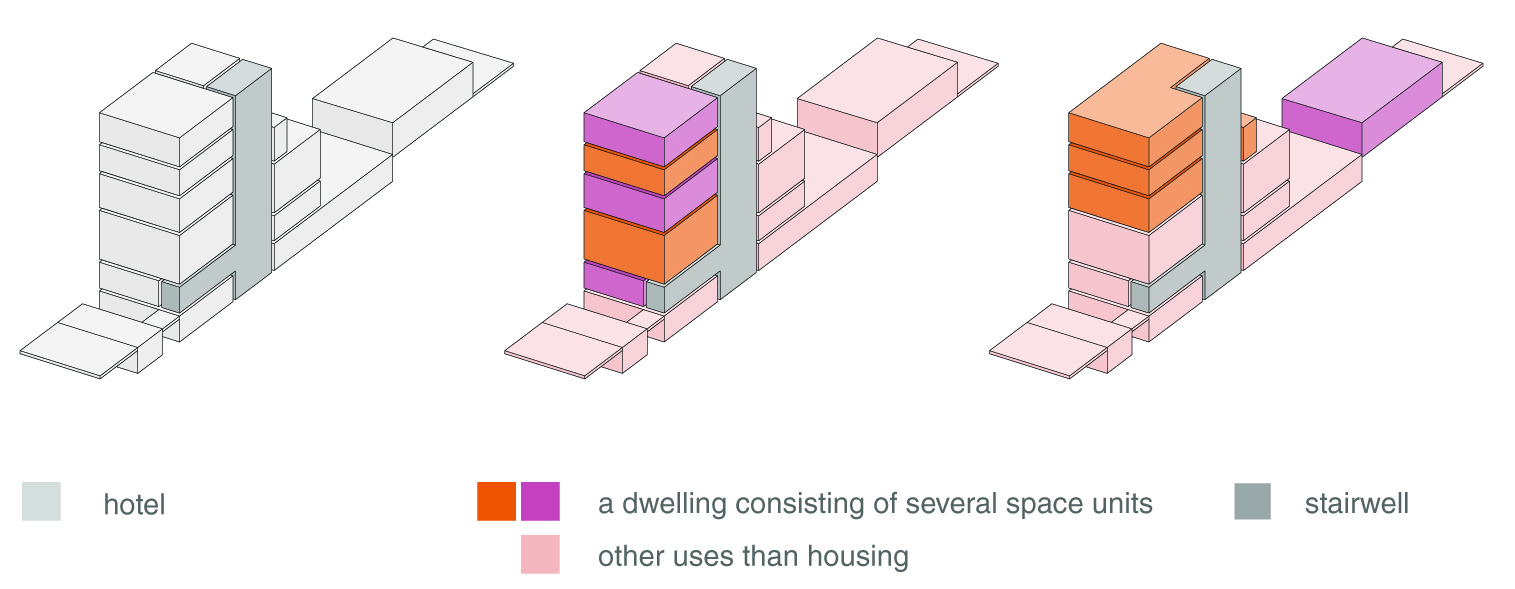
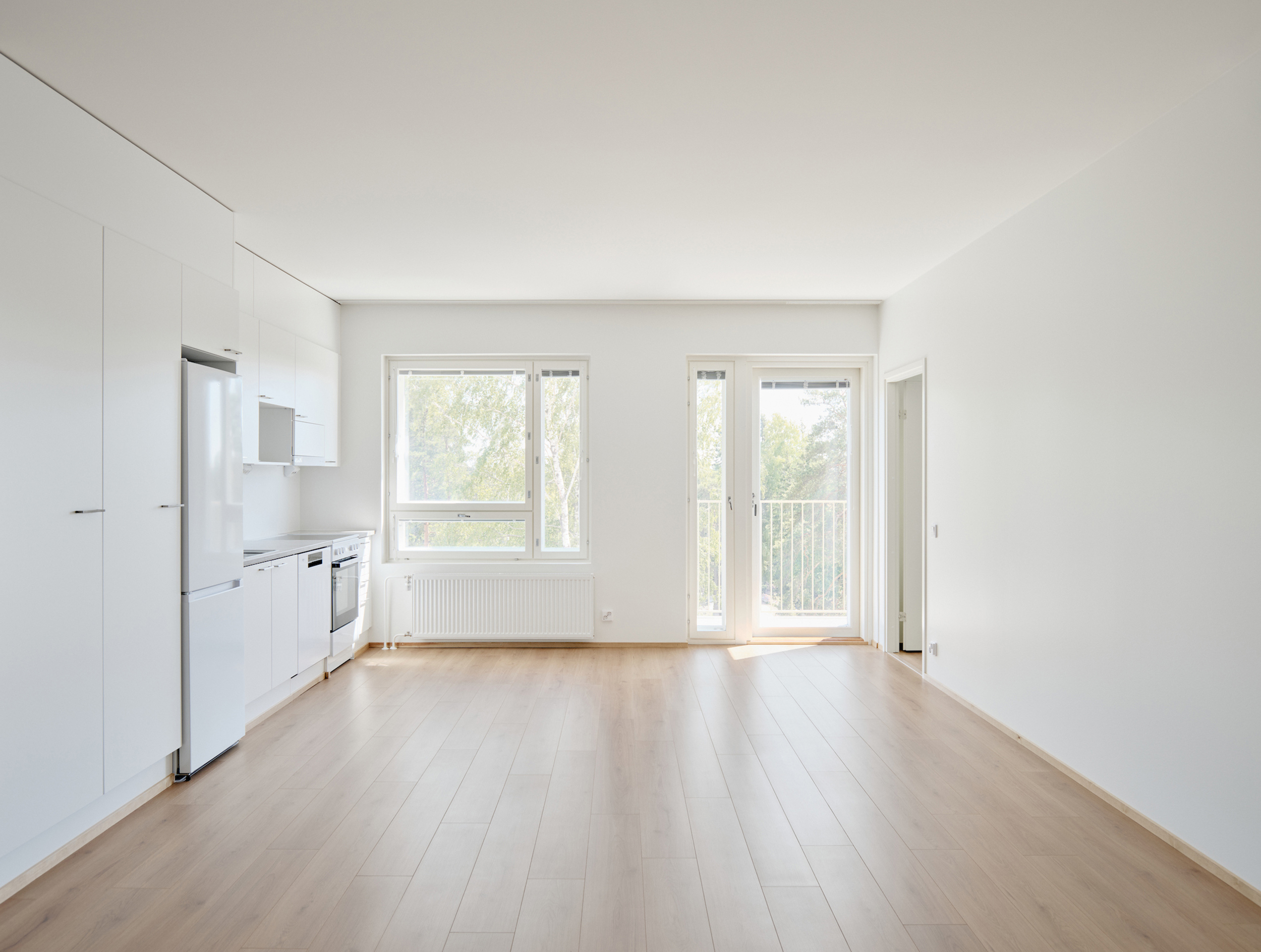
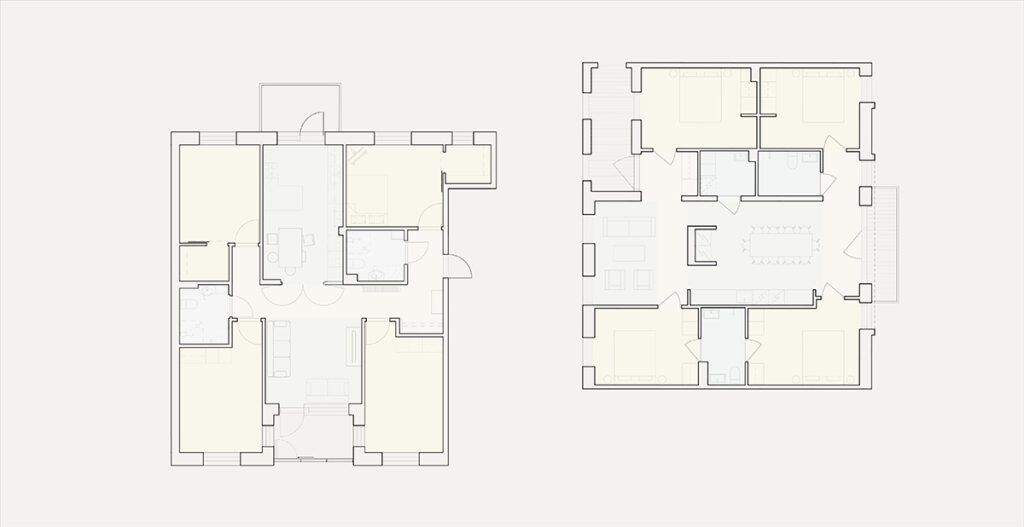
The Domino Apartment Building (2024), designed by Karin Krokfors Architects in Oulunkylä, Helsinki, is based on the idea that apartments are made up of space units. Therefore, the sizes of the apartments and their spatial solutions can be modified throughout the life span of the building. The overcapacity of entrances and vertical service shafts enhances flexibility. Diagrams: Karin Krokfors Architects
3. Interdependencies between Scales
The interdependencies between various scales are central in fostering resilience. Ecologists Lance Gunderson and C. S. Holling describe this as a panarchy, which is to say an alternative to hierarchy. A system cannot be understood or steered if the examination is limited to a single scale, such as that of an individual dwelling. The systems operate simultaneously on several levels – from a dwelling unit to the building, the urban fabric and wider societal constructs. The adaptability of buildings to varied purposes and ways of utilising space also enhances the sustainability of the urban fabric.
4. Different time frames
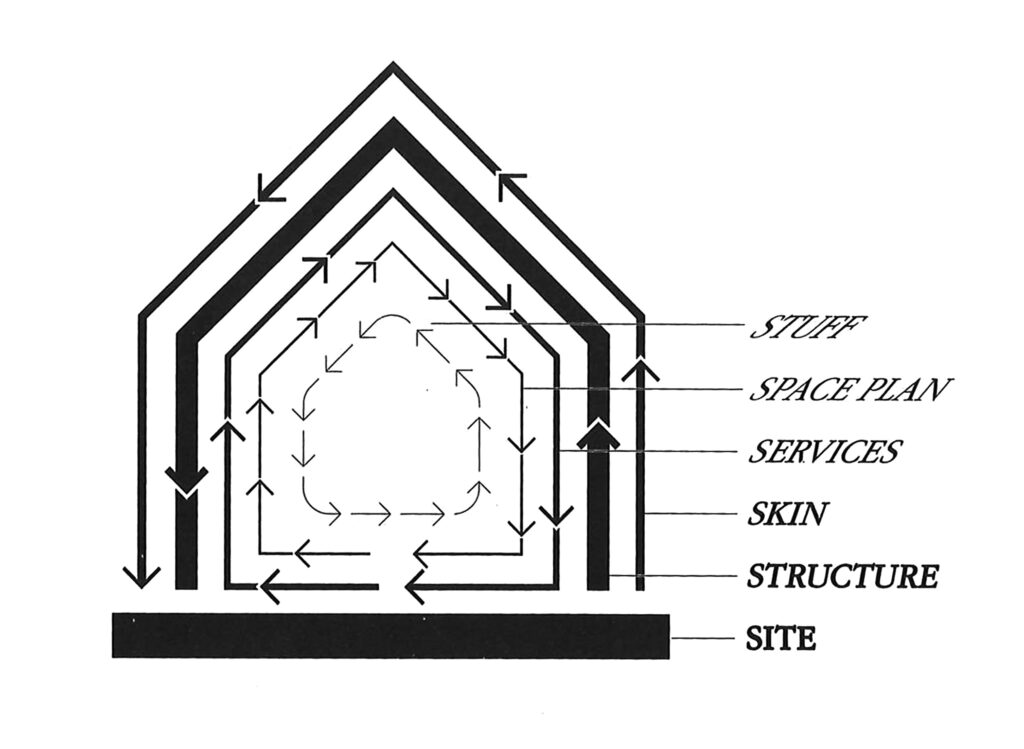
Different parts of a building change and adapt at different paces and are modifiable in different ways. The iconic diagram presented by Stewart Brand in his book How Buildings Learn (1994), elaborating on the work of architect Frank Duffy, illustrates the issue by defining the various pace layers within a building. The load-bearing structure, in particular, as the slowest-changing part of a building, largely defines the basis for the adaptability of the entire building. Load-bearing dividing walls that are difficult to modify are common in current housing production, which significantly limits transformability and plays a role in why buildings are being torn down before the end of their technical service life.
5. A Redefinition of Efficiency and Optimisation
Another factor that affects sustainability in the long term is how efficiency and optimisation are defined in spatial contexts within housing production. Brian Walker and David Salt, who have developed resilience thinking, emphasise that efficiency and optimisation should be redefined from a long-term perspective. In housing construction, the objectives having to do with efficiency, such as undersized studio apartments that are set apart from one another with load-bearing concrete walls, often serve short-term goals at the cost of qualitative aspects, which also has a direct impact on the potential flexibility of the buildings.
Stewart Brand also discusses the significance of so-called overcapacity for the adaptability of buildings. It refers to the ability of a building to exceed the requirements set for its original purpose. An example might be a taller-than-usual ceiling height, incorporating several entrances, a building services capacity that surpasses the regulatory requirements, or dwelling formation that is based on the idea of space unit thinking. This approach can significantly improve the building’s long-term adaptability. We should be far more ambitious than we currently are in developing and broadening this particular field of thought and solutions.
Flexibility Needs Clear Goals and Indicators
It is also important to consider which objectives a particular design solution is in service of, in addition to how the solutions simultaneously serve the residents, developers and sustainability. Owner-developers, in particular, play a key role in the evolution because they are usually also in charge of the later changes to and upkeep of the building, which are made easier by incorporating flexible solutions.
As it stands today, the emphasis in the cost considerations of construction projects leans towards the initial investment, which means that resource-efficient alterations and their potential benefits are overlooked, even if their positive impact on the life-cycle costs were recognised. This is why life-cycle assessments should pay more attention to flexibility and make it a requirement to include it as one of the sustainability criteria. The features to be assessed might entail, for instance, the resource-efficiency of alterations as well as the ease of upkeep and spatial transformability in the longer term. New indicators should be developed for measuring flexibility from spatial perspectives. This would involve a more precise definition of flexibility goals from perspectives beyond the material and technical considerations. They are, of course, essential elements of the solutions, but they do not constitute the objective in itself.
Measurability would steer development and support a shift towards more far-sighted thinking. The indicators should be able to illustrate the ways in which flexible solutions serve spatial resilience on various levels, such as from the rooms in a building to the larger urban form. The indicators should not drive the designer towards specific pre-designed solutions, and they should leave room for the emergence of new potential solutions.
Which kinds of buildings and urban structures, then, should we design? A key feature is the intrinsic ability of a building to generate and regenerate varied dwelling types and uses. The ideas and applications of adaptability should also promote the freedom of architectural design and foster the production of high-quality architecture, which also has a significant effect on the temporal and cultural sustainability of buildings.
Also these might interest you
Advert