Advert
The terraced apartment block in Jätkäsaari is an ambitious addition to the typology in Finland
The impact of Ambra Terraced Housing s a landmark lies in its startling monochromaticity, argues Tommy Lindgren.
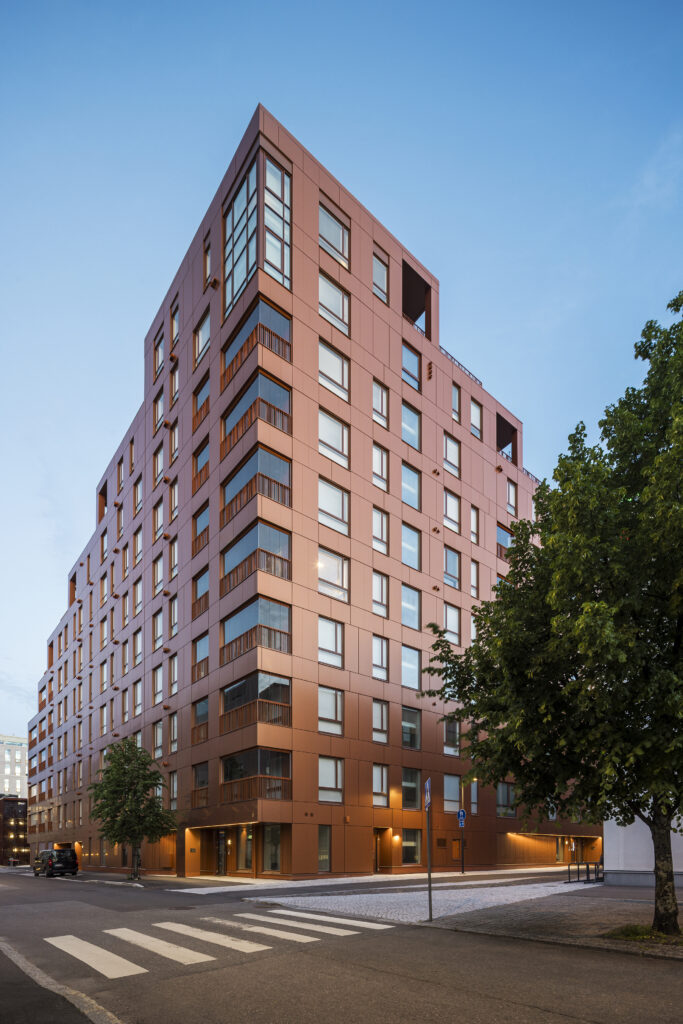
Ambra Terraced Housing
ONE Architects (previously B&M Architects) / J-P Lehtinen, Jussi Murole, Hannes Honkanen, Barbora Takkunen
Typology owner-occupied apartments
Location Länsisatamankatu 18, Helsinki
Gorss Area 13 823 m2
Completion 2025
More photos and drawings of the project →
A terraced apartment block is a special housing typology. Terracing makes it difficult to design stairwells and internal connections in buildings, and the stepped volume and generous roof surface place many demands on structural design. The advantages of the housing typology, however, compensate for the difficulties – a terrace provides versatile outdoor space for an apartment and thus certain characteristics of single-family home living in an urban environment.
The Jätkäsaari district of Helsinki is becoming a showcase for ambitious architecture, as the timber-construction Woodcity block (Anttinen Oiva 2018–2024) and the colourful tour de force in communal building Malta House (ARK-house 2013) were joined last year by the muted orange-coloured Ambra terraced apartment block.
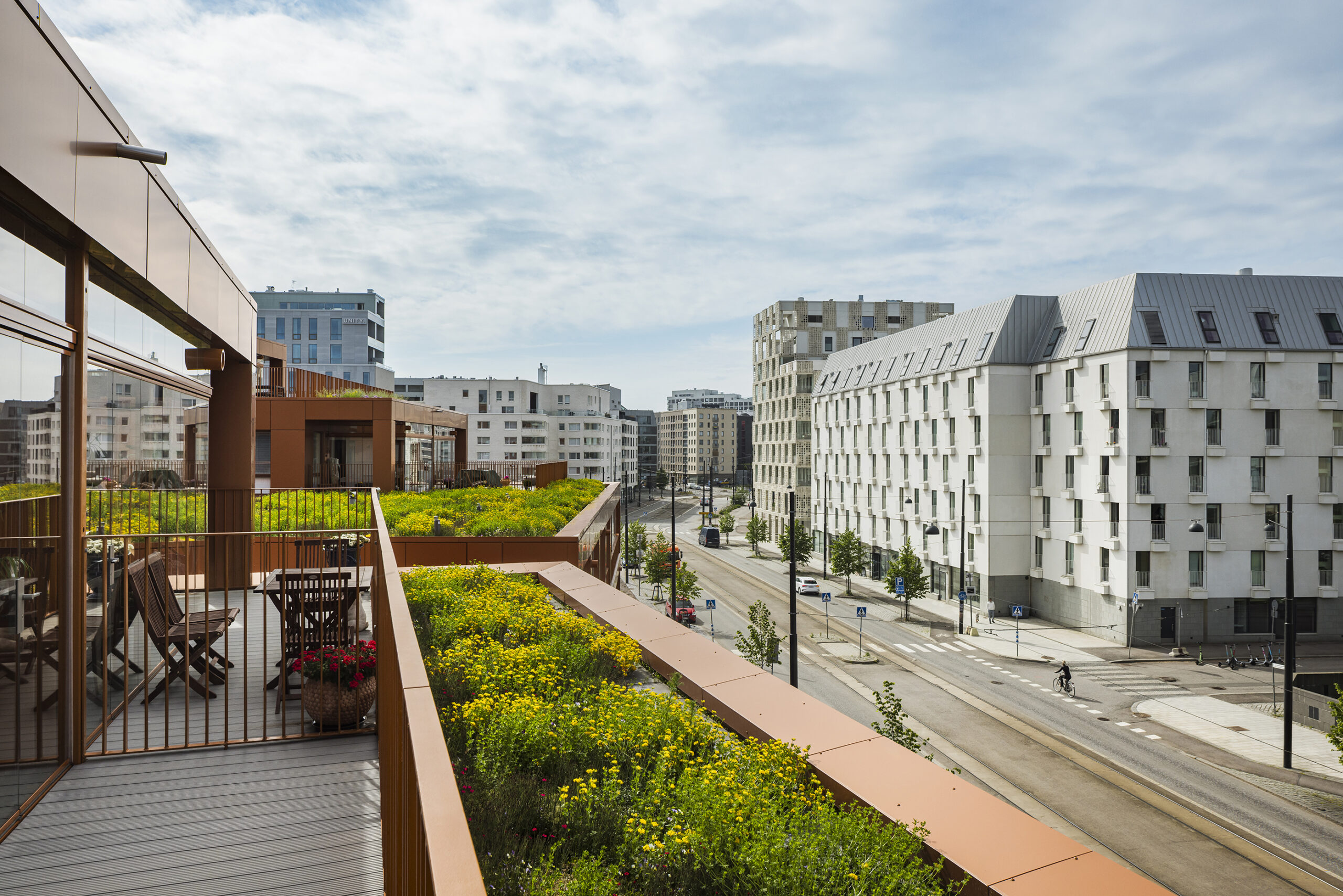
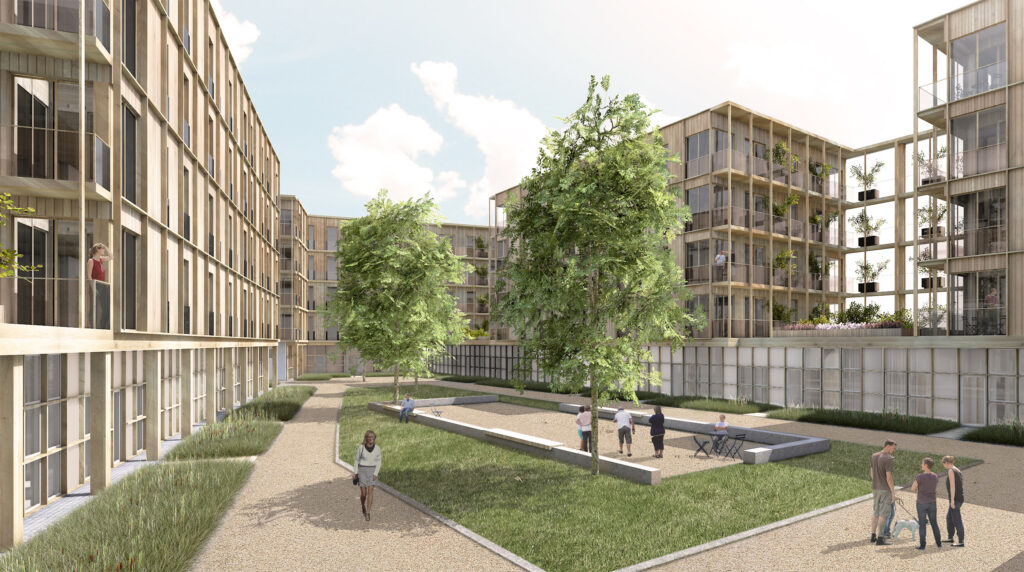
The Mountain Dwellings (PLOT 2008) in Ørestad, Copenhagen, is one of the most significant contemporary representatives of the building typology and a kind of extreme example – all of its apartments have their own terrace courtyards. Typically, in terraced apartment blocks, only some of the apartments enjoy their own outdoor spaces. Examples of this in Finland are the postmodern terraced apartment block in Pikku-Huopalahti (Reijo Jallinoja 1994) and the seaside hotel-like Portus Apartment Building in Verkkosaari (A6 Architects 2020), in both of which only a fraction of the apartments have terraces. Although the entire volume of Ambra is terraced, only some of the apartments have terraces. However, some of the apartments also enjoy their own direct access to the courtyard, incorporating into the building yet another feature typical of a single-family house. Ambra is a relatively ambitious example of this housing typology.
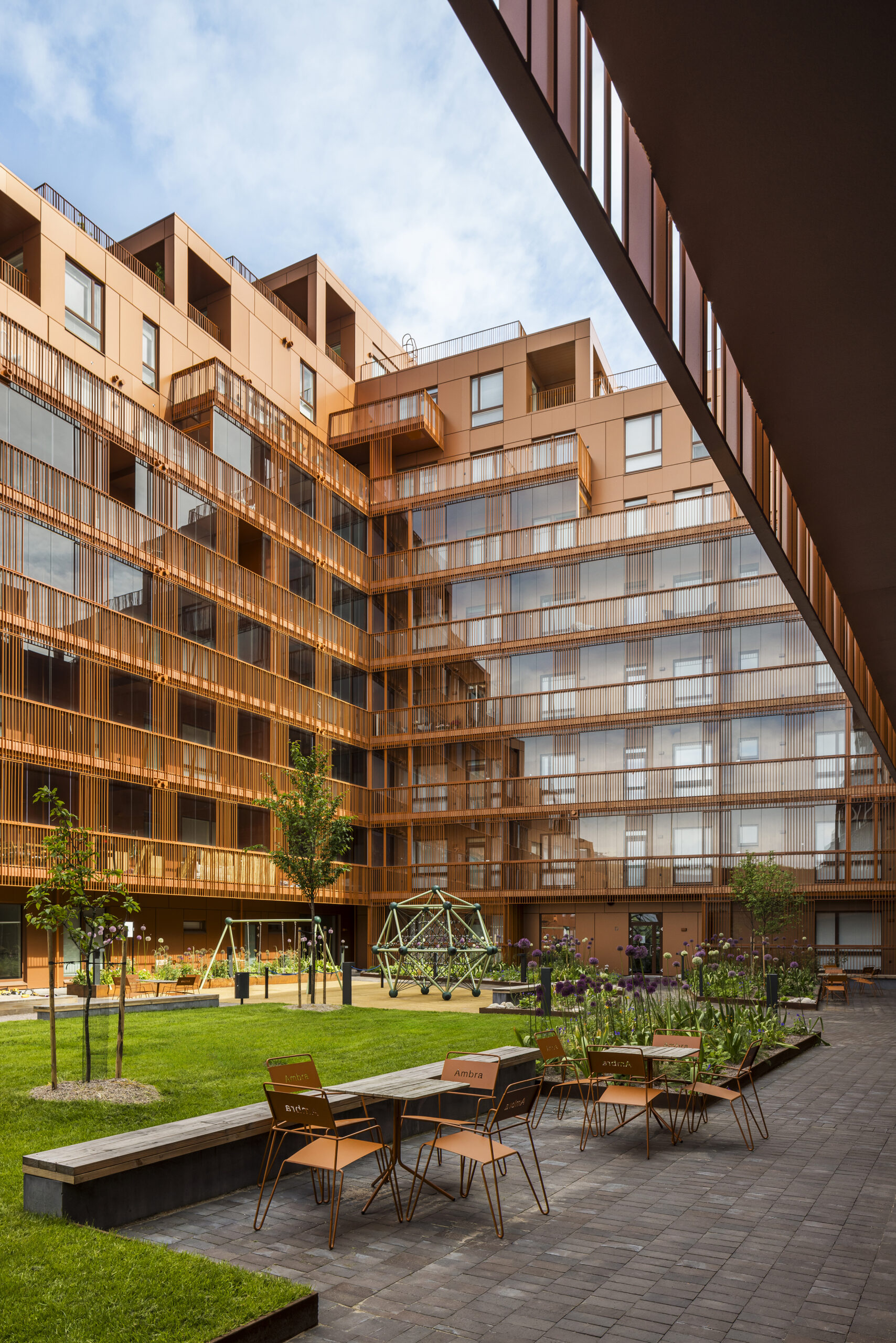
Meripihkan sävyinen julkisivuverhoilu on maalattua alumiinikomposiittilevyä. Photo: Anders Portman
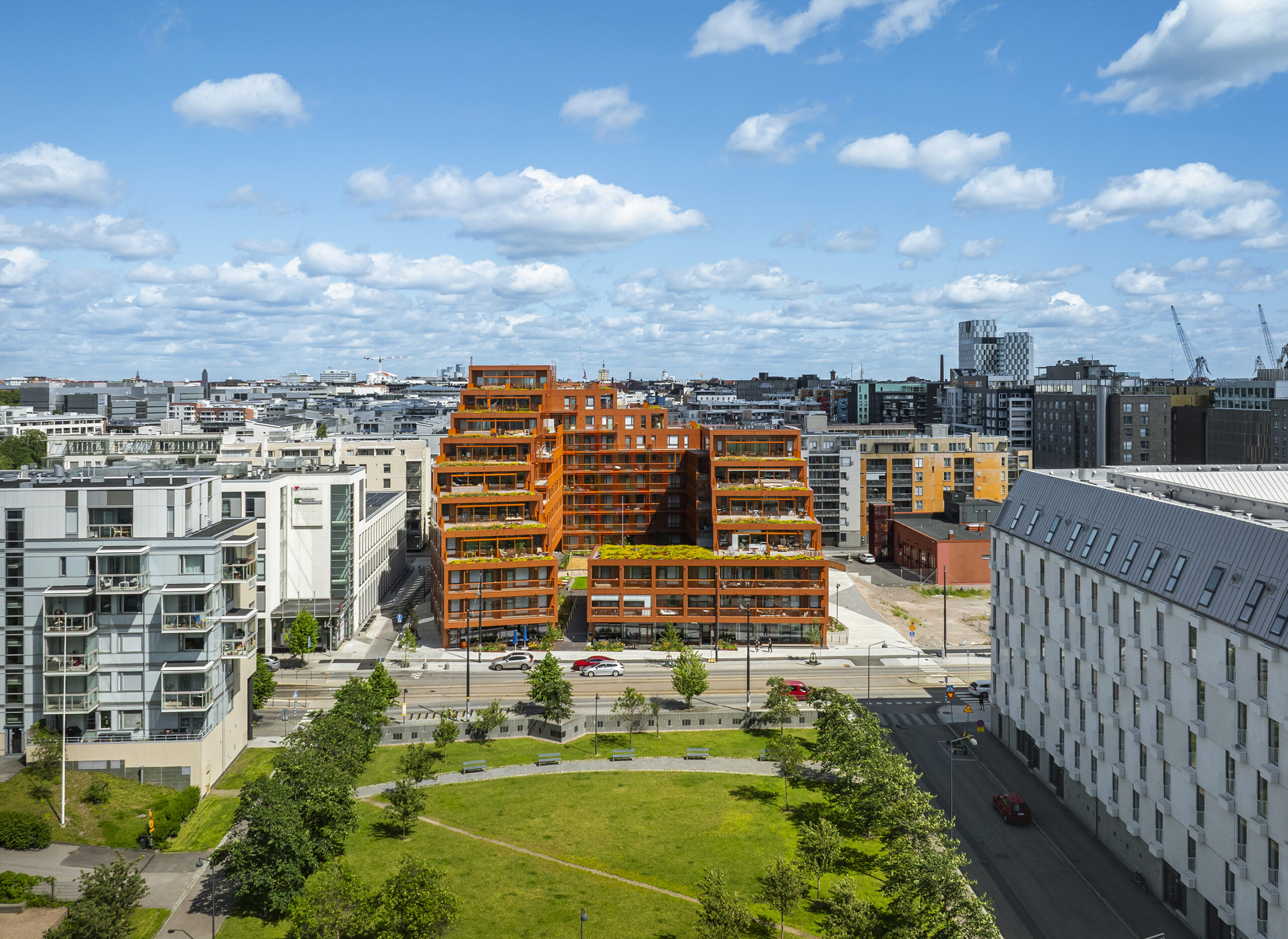
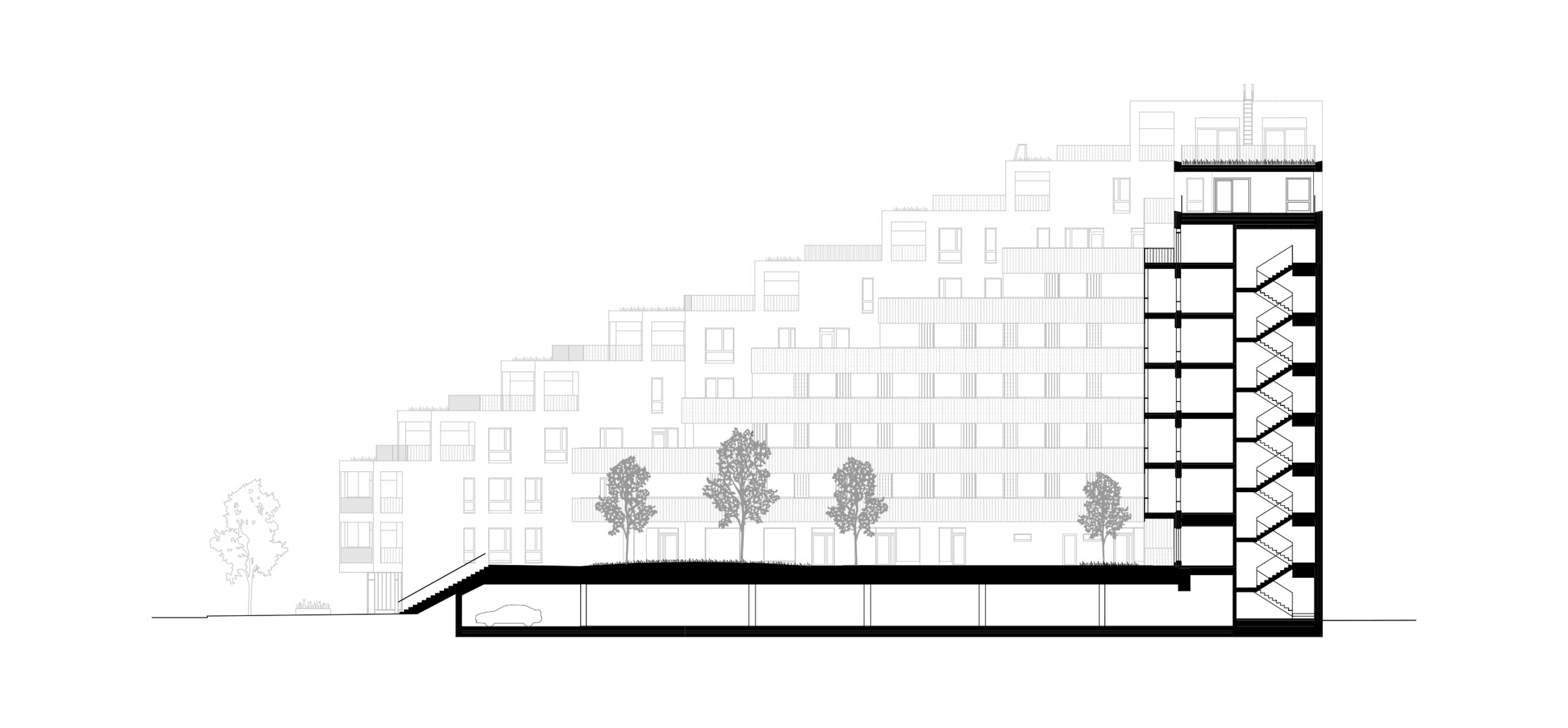
Pysäköinti on sijoitettu maantasoon pihakannen alle. Harraste- ja kerhotilat ovat pihatasolla. Drawing: One Architects
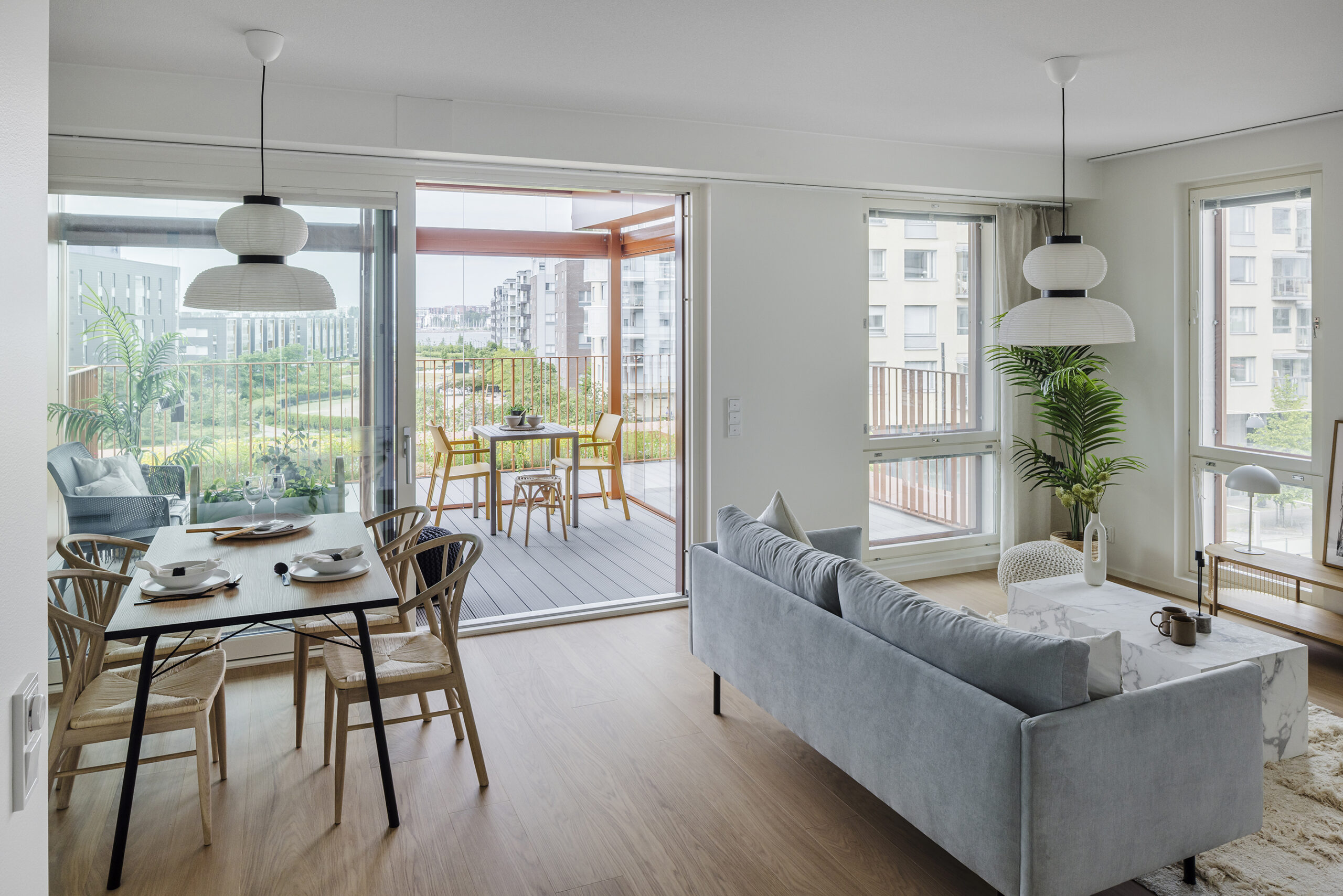
The striking building is based on the winning entry by B&M Architects in an invited architectural competition organized by the City of Helsinki and Skanska in 2021. The objectives, however, had already been outlined in the detailed plan amendment that came into effect in 2016. The goal of the plan was to create a terraced apartment block as a landmark for Saukonpaasi Park and to densify the urban structure by building residential and business premises, as opposed to the educational premises in the previous plan. Regarding the terraced apartment block, the plan was specific, as it determined the alignment of the massing, the recesses of the balconies, and the facade material. In terms of other construction, the plan is less restrictive, and a more conventional hotel building is currently planned for the presently vacant plot next to Ambra, which, if implemented, would act as a neutral pair to the terraced apartment block, rising up to a height of seven storeys, with a small setback.
In terms of its form, Ambra is a split perimeter block – its southwest side is intersected by stairs leading to a raised courtyard deck. Parking is located at ground level, beneath the courtyard deck. The northern corner of the building rises to ten storeys, and the volume descends in a slightly meandering manner towards Länsisatamankatu. Subtly folding inwards, the lowest, three-storey parts allow space for terraces for the ground-level commercial premises along the street. The detailed plan’s objective of a landmark building at the end of Saukonpaasi Park has been achieved, and the terraces of the building mass descending towards the southwest receive the light of the western evening sun and open up views of the park.
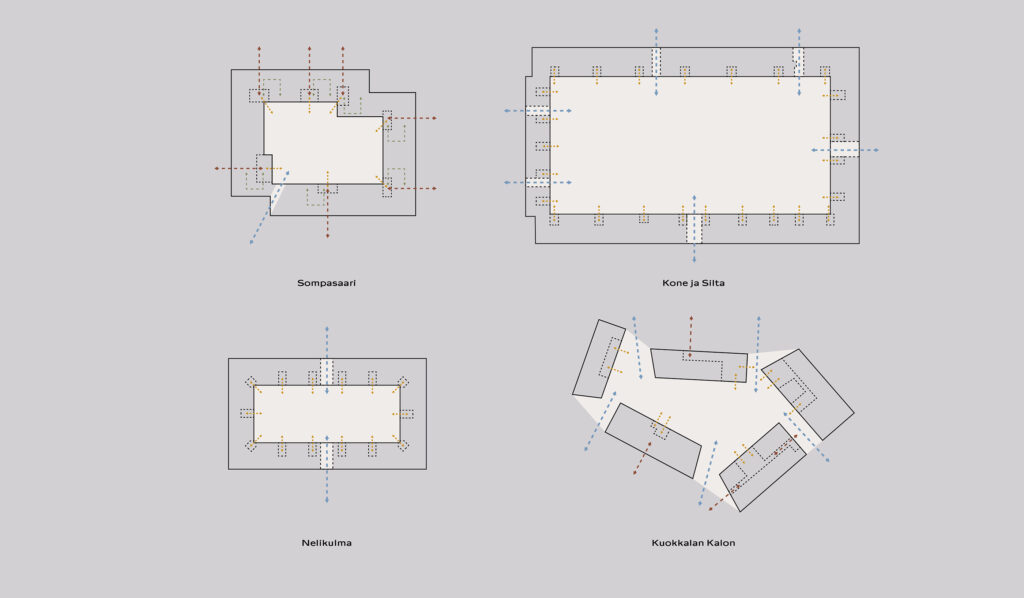
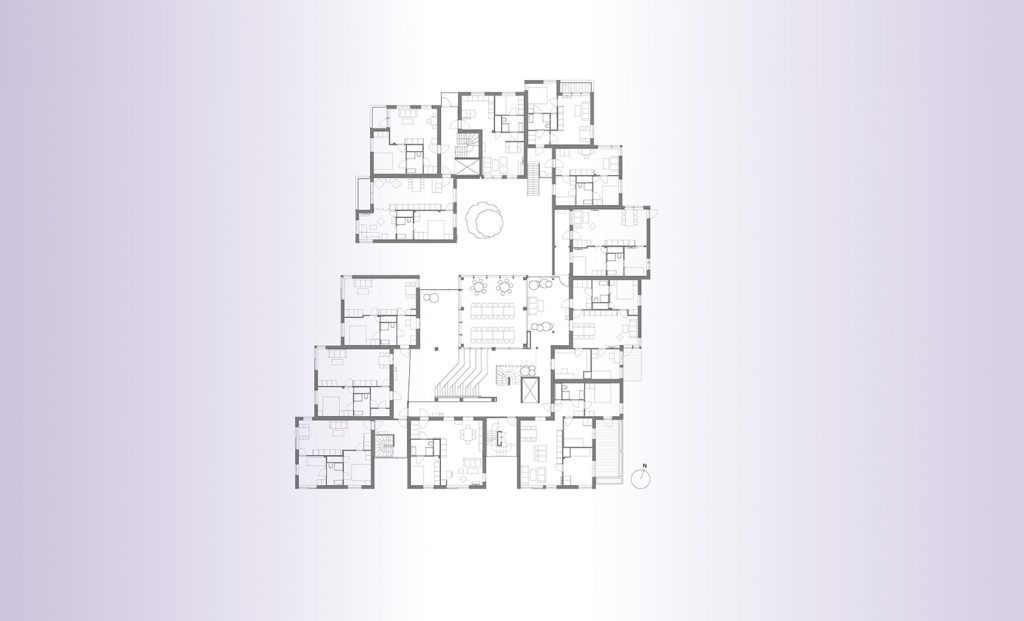
The challenges of the building typology are visible in the internal layout of the building, especially when a high floor area ratio and a large number of apartments are simultaneously sought. The stepped building mass leads to situations where some stairwells only serve a few apartments while others serve several apartments via a central corridor. The central corridors lead to long exit routes, and the apartments along them are small – some less than 30 m2. As a point of comparison, the terraced apartment block in Pikku-Huopalahti manages with fairly compact stairwells and without complex central corridor solutions, due to its larger apartments.
The impact of Ambra as a landmark lies in its startling monochromaticity. The effect is similar to that of the same architecture firm’s impressive Hyperion and Atlas tower blocks in Vuosaari (2023–24), whose concrete facades have been treated with a pearlescent bronze finish. In Ambra, all the building parts are in varieties of a muted orange, from the metal panels of the facades to the railings. The overall range of tones is reminiscent of recent international projects, such as Morris + Company’s R7 office building in London (2017). The balconies are only partially glazed, unlike in typical housing production, and thus the glass surfaces do not dominate. Ambra emerges as a mono-material sculpture in the cityscape and is a significant addition to the rather limited range of Finnish terraced apartment blocks.
Also these might interest you
Advert