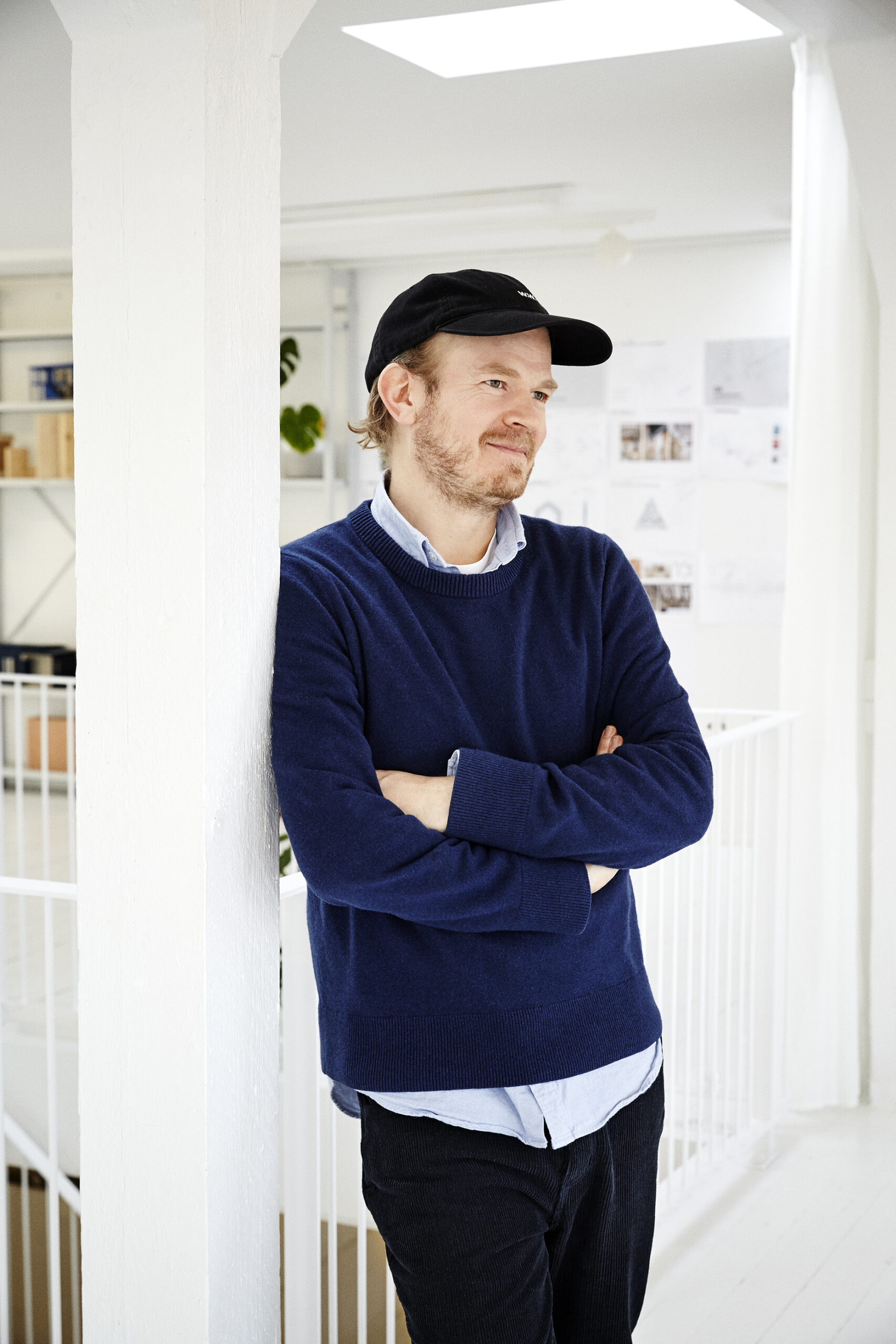
“It takes time to turn a supertanker” – Architect Martin Laursen explains where Danish sustainable architecture currently stands
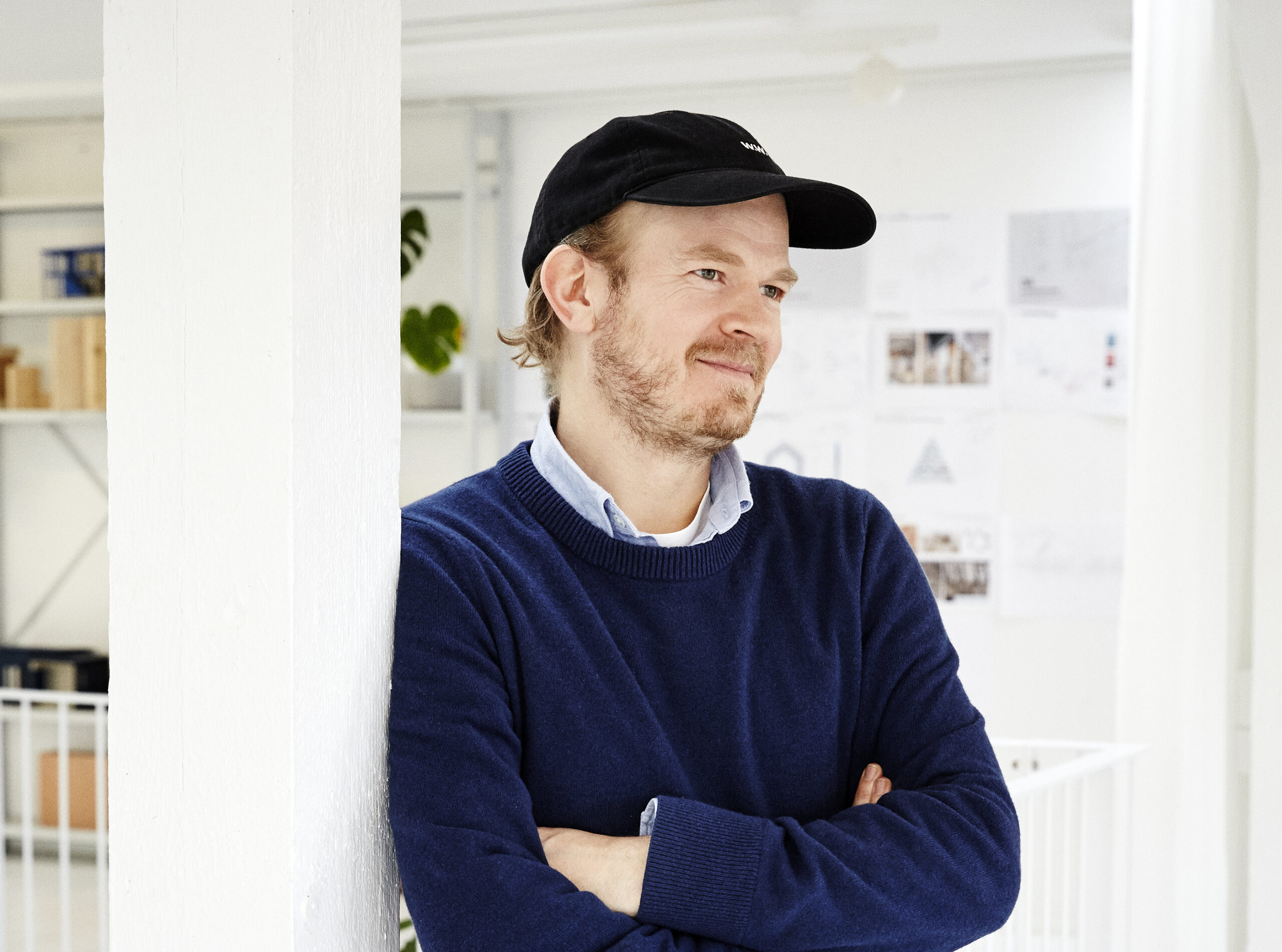
THE THEME OF OULU’S EUROPEAN CAPITAL OF CULTURE 2026 “Cultural Climate Change” has had many wondering what the enigmatic concept is really about. Danish architect Martin Laursen has also given this some thought. He is one of the two keynote speakers invited to the Annual Seminar of the Finnish Association of Architects, which will be held in Oulu in mid-April, the theme of which has been borrowed from the European Capital of Culture 2026. I spoke to Laursen via a remote connection in early March.
Laursen, who is a partner at the architectural firm ADEPT begins by saying that he would not normally define his firm’s work in terms of the concept of Cultural Climate Change. After giving it some thought, however, he agrees that the concept relates to many of the topics that ADEPT has been working on recently.
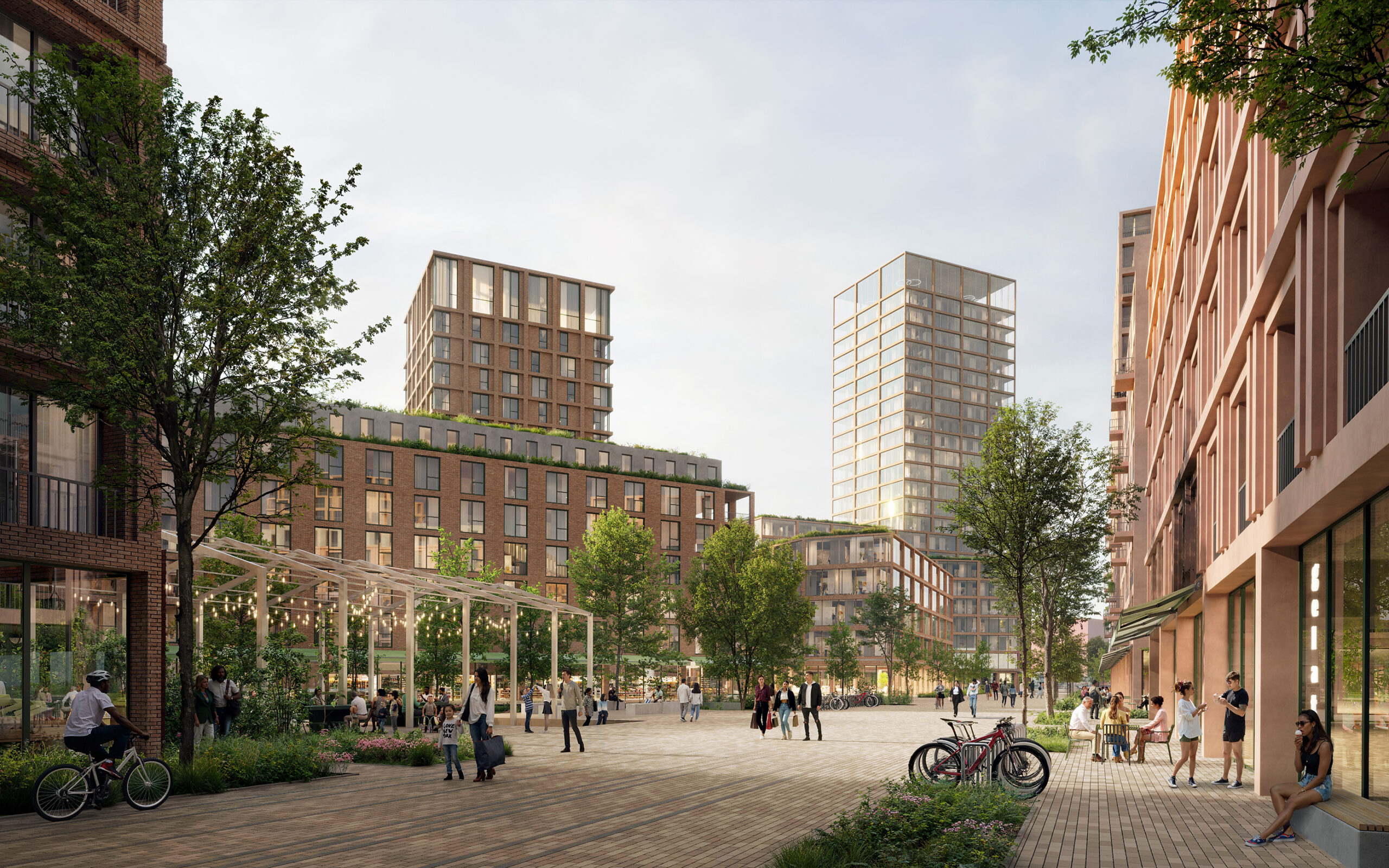
As an example, Laursen cites a parallel commission currently under evaluation, in which five design teams has been developing ideas for the future of the Refshaleøen in the central harbour area of Copenhagen. The edge of the former shipyard area will be transformed into a hybrid coastal protection landscape that will protect the inner city from rising sea levels due to climate change.
Ecological and cultural sustainability is supported by the goal of saving all existing buildings in the area, which are currently being used by the Copenhagen Contemporary art museum and other cultural and innovative actors, and building new in and around them.
“Presently, wooden buildings higher than seven storeys are rarely economically viable in Denmark.”
Following architecture media it is easy to be under the impression that Denmark is many steps ahead of Finland in sustainable construction. In fact, these high-profile pioneering projects have made it possible to implement solutions that, for now, we in Finland can only dream of. However, Laursen does not entirely share such a rosy picture of the innovation of the Danish construction industry.
“Even if the business is moving its focus, it takes time to turn a supertanker. In Denmark, the architecture media is very focused on sustainability, but in reality we can still often only do as much as the project economy allows. There are many ways to build very sustainably, but unfortunately these are often more expensive than the conventional solutions that developers are used to and base their calculations on. Sometimes you also need both a progressive thinking client and a bit of luck to push a sustainable agenda.”
Laursen, who works mostly in urban development, explains how he sees planning as a tool to create the conditions for sustainable construction, although the final decisions are always in the hands of the developers.
“Presently, for example, wooden buildings higher than seven storeys are rarely economically viable in Denmark. That is one of the reasons why we would never make an urban plan where all buildings are for example ten storeys high – simply because we know that this means a concrete construction. Wood structures also require slightly higher floor heights due to sound insulation requirements, which also needs to be taken into account in the plans.”
“There is a risk that a small group will have too much influence on how our physical environment changes.”
A career launched through competitions
Laursen founded ADEPT together with Anders Lonka and Martin Krogh after graduating from the Aarhus School of Architecture in 2006. The trio’s friendship had begun already in high school.
“We were young and full of energy, and we wanted to do something together as adults. At the time, we hadn’t yet decided to become architects. One thing just led to another and suddenly we were qualified architects and had a company together. We believed that we would conquer the world with our ingenious architecture, but of course it wasn’t that easy.”
Like many fledgling firms, ADEPT also participated in open architectural competitions in various countries.
“We threw all our energy into those, even though we knew that our chances of winning were slim. Of course we rarely won, but looking back now, I can see that we learned a lot from those competitions.”
The first competition that ADEPT entered as a company was for the National Library of the Czech Republic in Prague. The five-person design team worked on the competition proposal for three months – without winning a thing.
“At that time, we didn’t know anything about running a company, how to balance our effort, time and resources. After the competition was over, we looked at each other and asked, what next? It was a steep learning curve in how to divide our focus – to still do competitions, even open ones from time to time, but to also look for other opportunities for work and collaboration. That’s how we pretty much operate today.”
According to Laursen, ADEPT still receives the majority of its commissions through competitions, and doing them takes up most of his personal working time. With maturity as a company, ADEPT by now prefers invitational competitions and parallel commissions as they offer the best working conditions, but the general trend of fewer open competitions Laursen believes is problematic for the diversity of the profession:
“Participants are typically always selected from the same pool of offices, so there is a risk that a small group will have too much influence on how our physical environment changes. That is why I hope there will be many different types of competitions to ensure that firms of different sizes and perspectives have the opportunity to access interesting assignments, so set their mark too. In addition, young architects should have the opportunity to realise their dreams through open competitions, just as we once had.”
The benefits of teamwork
ADEPT’s first realised building project, the Dalarna Media Library in Falun, Sweden, completed in 2014, was also based on a winning entry in an international invitational competition held in 2010. They submitted the competition proposal together with Japanese architect Sou Fujimoto, who at the time was not yet as well-known as he is today. They got in touch with Fujimoto through friends who had worked in his office.
“Up until then, Fujimoto had mainly done small projects in Japan, and he was interested in working in Europe. We, on the other hand, were attracted by the opportunity to collaborate with a Japanese architect.”
Laursen says that ADEPT’s founders noticed the benefits of multidisciplinary teamwork already during their studies and were always happy to seek out different collaborations.
For example, they developed the facade concept for the Falun library together with Danish artist Jeppe Hein. Laursen says that the forests and lakes of Dalarna made a great impression on them, so they wanted the landscape to be part of the building’s exterior. The library was surrounded by a frame, onto which horizontal, reflective louvres were attached, mirroring the environment and changes in the weather.
Danish architectural firms receive around 15 percent of their turnover from abroad, many times more than in Finland.
Since the Falun library, international projects have been an integral part of ADEPT’s work. In Denmark this is not at all exceptional, as architectural firms receive around 15 percent of their turnover from abroad, many times more than in Finland.
Laursen explains this phenomenon by saying that in a small country there are only a limited number of interesting assignments, but a very large number of architects competing for them: around twice as many as in Finland. The downside, however, is the relatively closed domestic market.
In recent years, ADEPT’s professional expertise has been in demand, particularly in Germany and the Czech Republic, where the firm has designed everything from large-scale regional plans to individual buildings and urban spaces. According to Laursen, working across scales and design disciplines is also typical for ADEPT.
“From the very beginning, it has been normal for us to have a small landscape project on our desk one day, a huge regional plan the next day and a building project on the third day. We have strived to work differently from many larger firms, to grow our resilience by refusing to stay in one box. It keeps our curiosity alive and bring in perspectives from across the architectural field.
As the firm has grown, however, a certain degree of specialization has been inevitable. ADEPT currently employs around seventy architects, landscape architects and urban planners in its offices in Copenhagen and Hamburg.
A shell for activities
ADEPT’s best-known building is undoubtedly the new Aarhus School of Architecture, completed in 2021.
Three of the top entries from the open phase of an architectural competition held in 2016 together with three internationally renowned firms were invited to participate in the second phase of the competition: the Japanese firm Sanaa, the French firm Lacaton & Vassal, and the Danish firm Big. The winning design was created in collaboration between, ADEPT and the design team of Vargo, Nielsen & Palle. Designing a new building for their own school was a very exceptional task for the firm’s partners.
The school of architecture was built on a former freight rail yard near the centre of Aarhus, which had become a hub for local alternative culture after its operations had ceased. As chance would have it, the CEO of the Institut for (X) artist community operating in the area is Martin Laursen’s older brother, Mads Peter Laursen.
“One of the reasons we won the competition was our team very deliberately worked with urban identity and handled the scale of the site and its surroundings in a very different way than the other proposals.
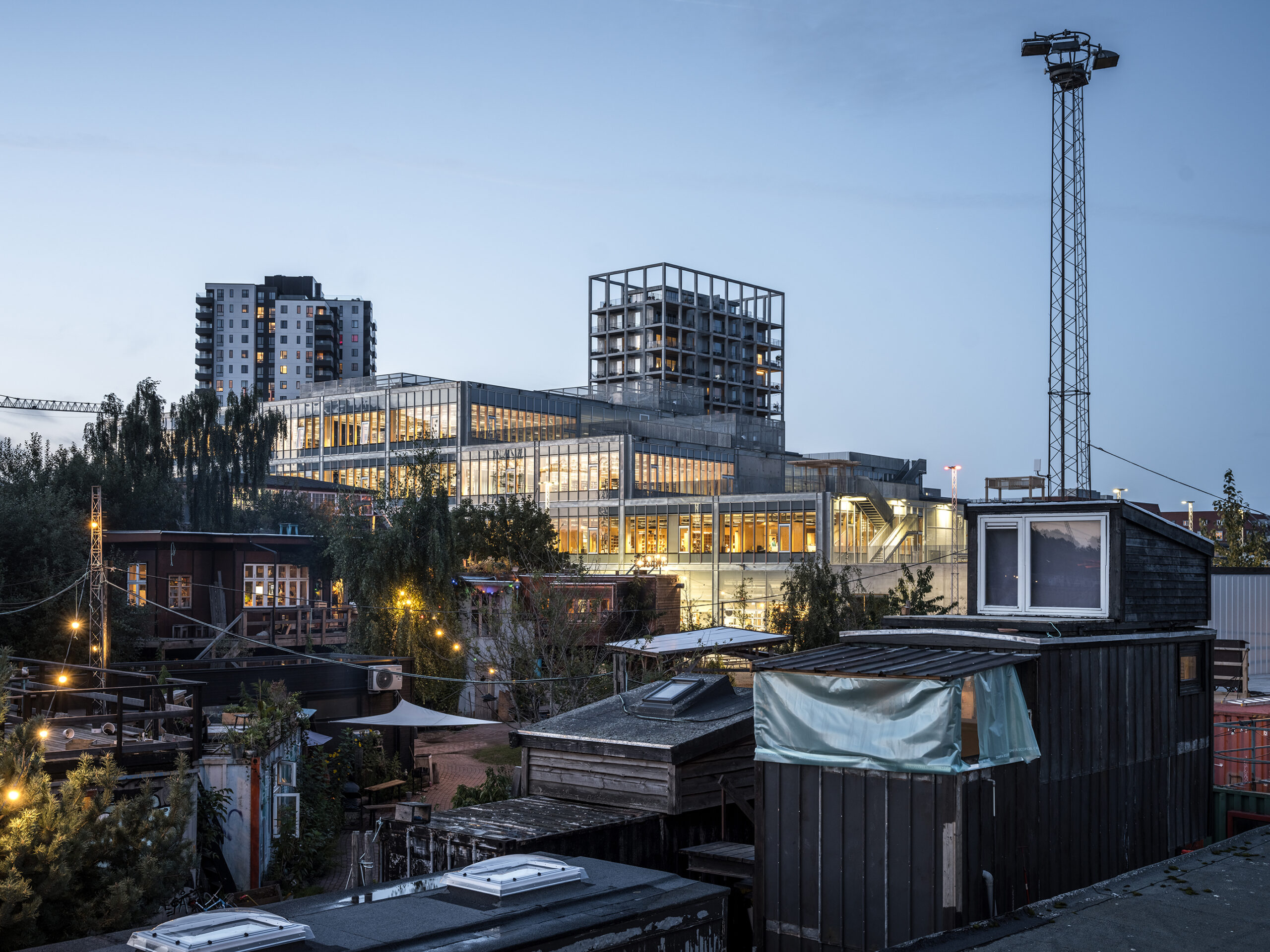
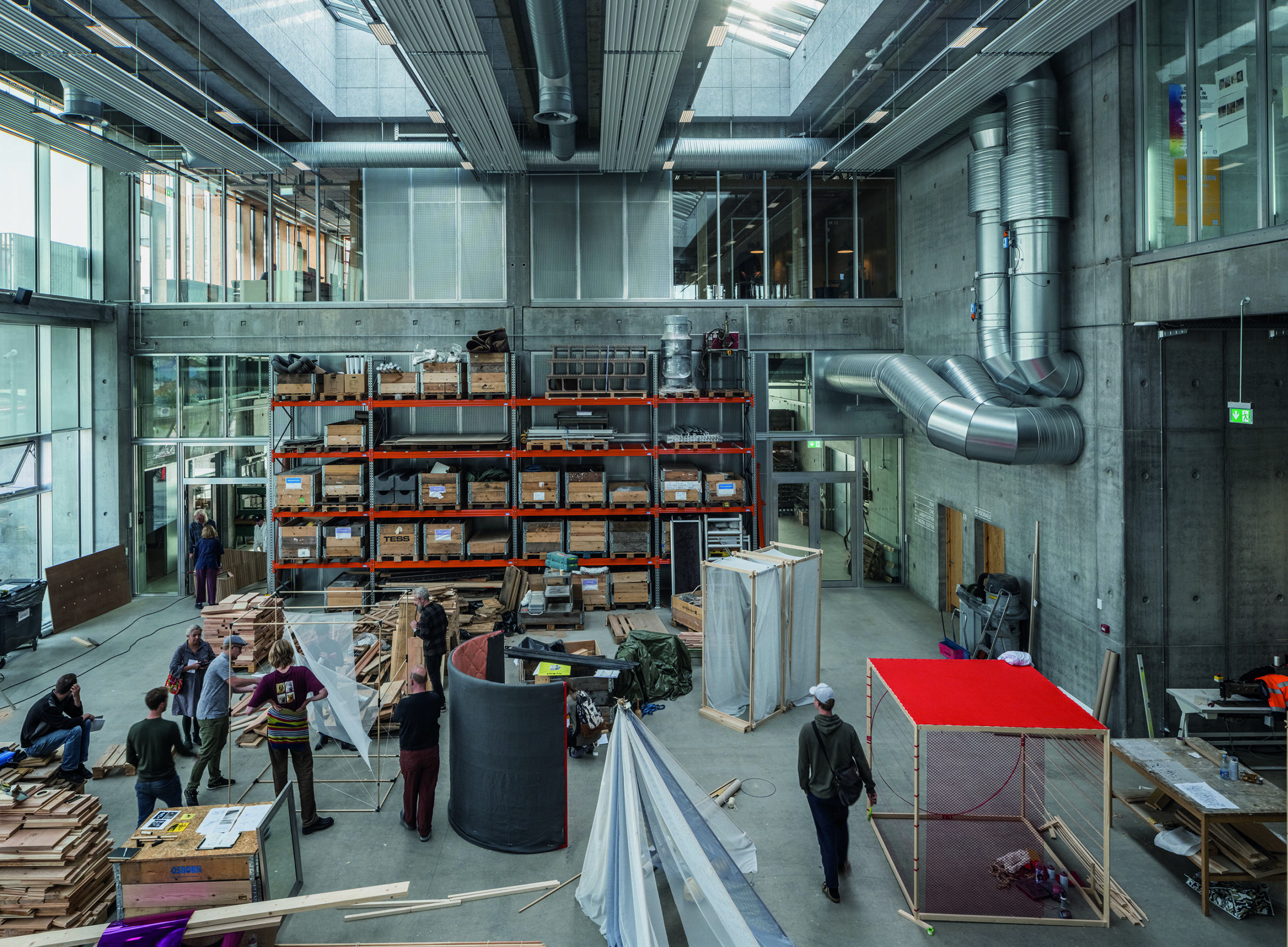
A few old workshop buildings still had to be demolished to make way for the school. According to Laursen, this could potentially have led to a major conflict with its users, but fortunately the process of change was organized in a way that has made everyone happy with the end result, one of the reasons is that outside areas were left open and unprogrammed, anchoring the school in its surroundings.
“The great thing about the process was that it made everyone feel included and to feel ownership to the project.”
The industrial history also influenced the appearance of the architecture school building – it looks more like a rough manufacturing building than an academic institution, although the degree of finish of the concrete structures is enviably high by Finnish standards. Modularity and long spans also allow for a variety of uses for the spaces.
According to Laursen, the building was designed as a kind of shell that allows users to customize it to their liking. He says he repeatedly hears from visitors to the school that upon entering, they immediately feel “I want to be a student again and build and create all sorts of things here.”
From department store to cultural centre
In addition to new buildings, ADEPT has designed several conversions of existing buildings for new uses. A particularly interesting current project is the House of Music in Braunschweig, northern Germany. It will give a new life to an old department store building as a cultural centre. ADEPT won the invitational competition for its design last year.
“The most important reason for our proposal to be chosen as the winner was as the only design, it kept the majority of the old department store and placed the new concert hall on top of the old structure. That way, we kept the carbon-binding structures inside the building and redesigned the facade – but in a contemporary manner still related to the existing.”
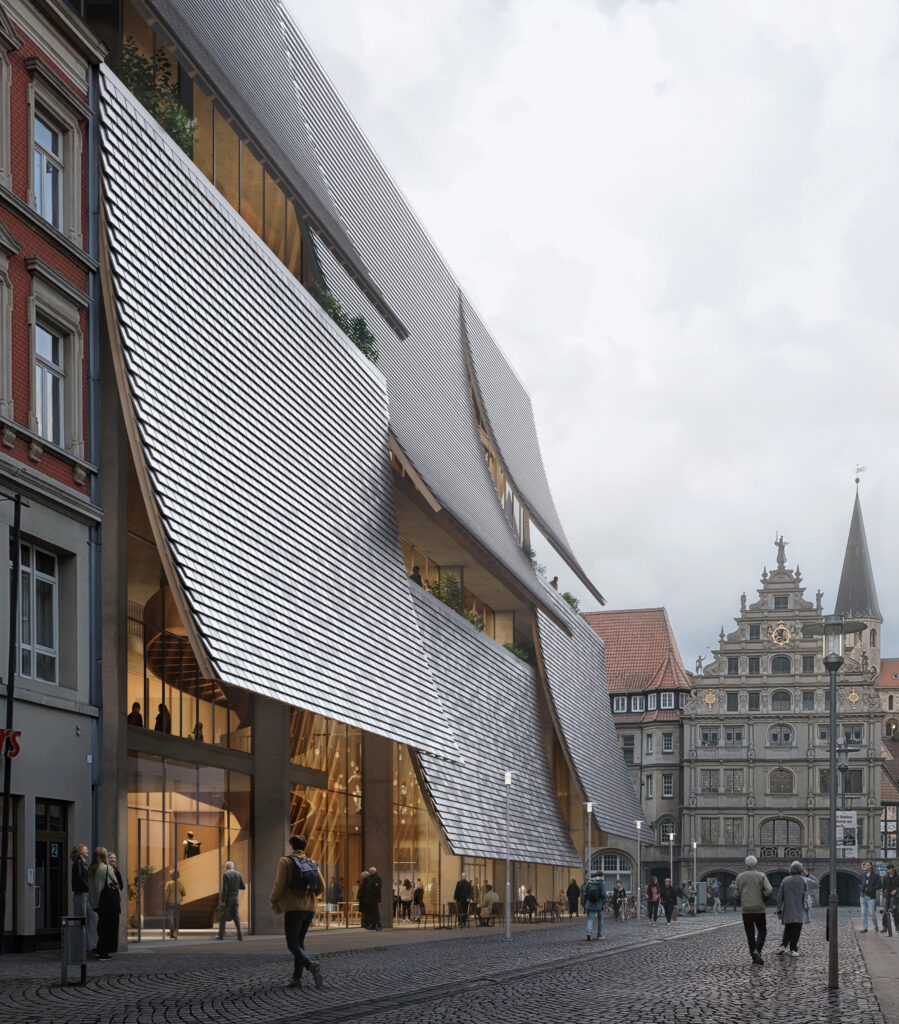
Since winning the competition, the project has been taken forward in ADEPT’s Hamburg office, and the implementation planning should start in earnest at the end of the year.
Finally, I ask Laursen about his dream project. At first, he hesitates to answer because ADEPT works for so many different sectors, but then he replies that the most interesting thing is to work on projects where the existing becomes part of the new.
“My dream project would probably be a huge urban plan that would include a lot of old buildings and where we could design a large cultural building inside them.”