Advert


The First European Women Architects
The double biography on two women architects opens up a window into the work of architects and gender equality in late 19th and early 20th century society and architectural practice.
Päivi Hovi-Wasastjerna: Signet – Arkkitehtinaisista ensimmäiset. Päivi Hovi-Wasastjerna 2023. 192 pages.
Päivi Hovi-Wasastjerna’s Signet – Arkkitehtinaisista ensimmäiset (“The Two Signes – The First of the Women Architects”) opens up a window into the work of architects and gender equality in late 19th and early 20th century society and architectural practice. The double biography is a continuation of Hovi-Wasastjerna’s series of architect biographies. It has a particular affinity with her 2022 biography of Bertha Enwald (Bertha Enwald – Uraa uurtamassa).
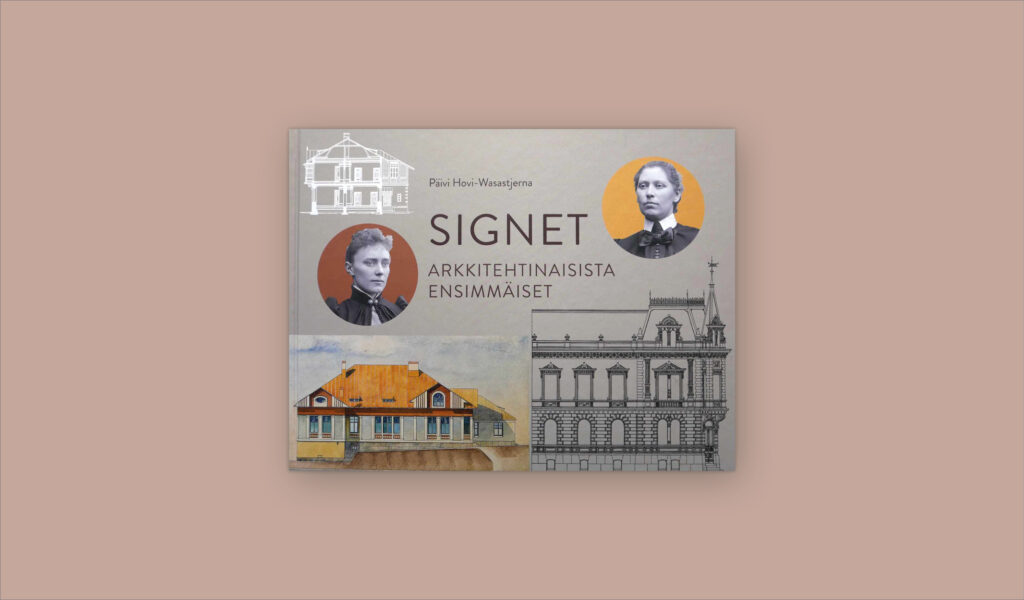
The two Signes, i.e. Hornborg (1862–1916) and Lagerborg (1870–1968), were the first trained women architects in Finland. Hornborg graduated in 1890 and Lagerborg two years later. Signe Hornborg was, in fact, the first academically trained female architect in all of Europe – in Sweden, for example, the first women did not graduate in the field until 1919. Alongside the two Signes, Hovi-Wasastjerna’s book also highlights other early women architects in Finland and abroad. The most renowned of Hornborg’s and Lagerborg’s peers in Finland is, of course, Wivi Lönn, but the author has made the wise choice to focus on the stories of the lesser-known female colleagues.
The life journeys of Hornborg and Lagerborg (later Lagerborg-Stenius) are woven together through various phenomena, which helps the reader to form an understanding of the impact that the social circumstances of the time had on the work of an architect. Hornborg and Lagerborg were both raised in middle-class families that held education and the schooling of girls in high regard, which played a part in paving the way towards their exceptional career choice.
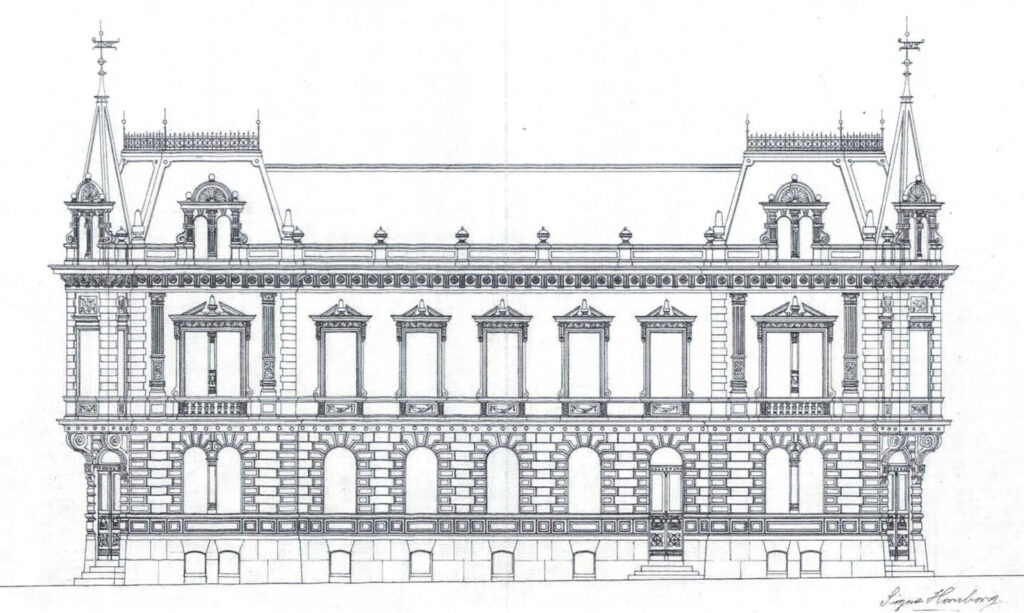
The double biography does a particular service to the life story of Signe Hornborg, for whom the source material has probably been rather scarce. Hovi-Wasastjerna has accompanied the story with a comprehensive description of the conditions in which Hornborg lived and worked. As a pioneer for her gender, Hornborg had to step into spaces from which women before her had always been excluded. In addition to working in assisting duties at an architecture office, she completed a handful of independent design assignments. The Newander Building (1892), also known as Signelinna (“Signe Castle”), in Pori has been preserved to this day as a monument to the first European female architect. Despite her pioneer status, Hornborg’s public activity remained short-lived, which is why she is not really a candidate for a traditional biography on her own.
The story of Lagerborg-Stenius, who achieved a long career as an architect and in politics, provides the themes addressed in the book with the gravity of traditional historical writing. The sections covering her political activities are particularly fascinating. The women’s movement has been given a good amount of space in the book, but I would also have liked to read more about Lagerborg-Stenius as an executive board member in the Swedish People’s Party of Finland, as a local politician and as a candidate in parliamentary elections. Her motto was “inexpensive and practical”, which was also seen in her architecture. During her career, she designed several buildings that served the functions of a welfare society, and these are presented in the book with ample image material. The art-nouveau-style buildings are reminiscent of similar works by Wivi Lönn. A parallel examination of works by Lagerborg-Stenius and Lönn would provide an even more precise understanding of the impact that female architects had on the societal development of the early 20th century.
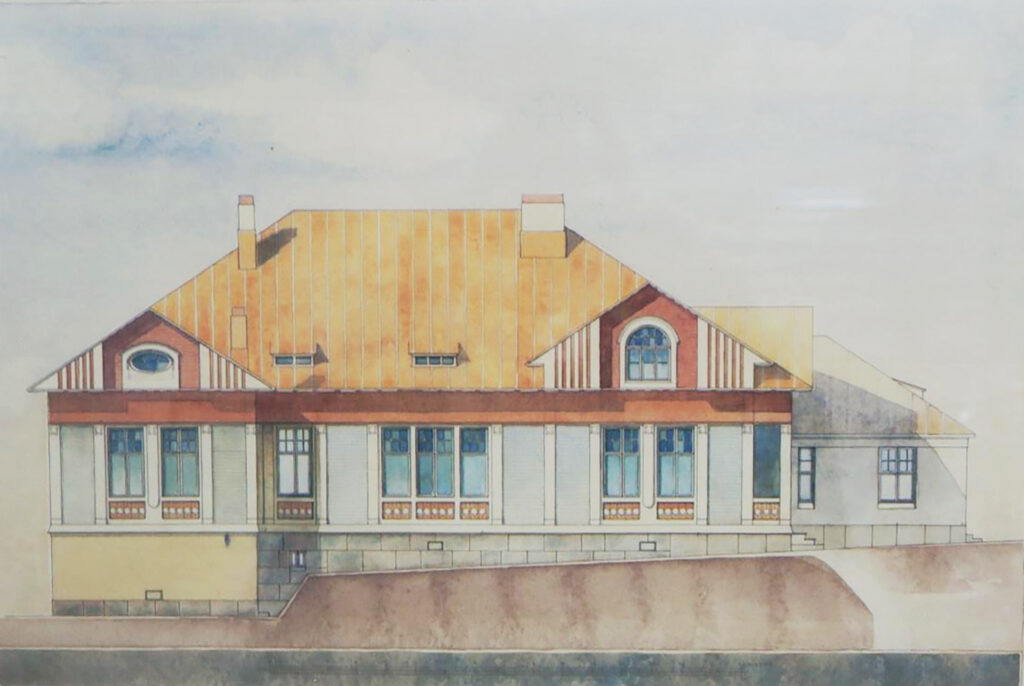
Considering the scarceness of the source material, Signet – Arkkitehtinaisista ensimmäiset paints a relatively thorough picture of the late 19th and early 20th century female architects as active members of society. In recent years, several light-fiction novels have been published on the lives of early women architects – the information vacuum related to the topic has undoubtedly played a part in creating demand for fictional stories. Here, carefully sourced and referenced historical writing should step in to fill the void.
Hovi-Wasastjerna’s book contains an abundance of previously unpublished photographs and drawings that do fill in the gaps in the otherwise fragmented life stories. The text reads smoothly but would have benefited from one more round of editing. The thematic entities are, at times, slightly repetitive. Still, Hovi-Wasastjerna’s rich narration succeeds in bringing the two Signes to the forefront of our architectural history.
HANNA TYVELÄ is art and social historian (MA) who has researched, curated and written about the history of Finnish women architects.
Also these might interest you


Advert