Are there open endings in architecture?
Films offer one means to delve into how architecture is experienced and used. In her doctoral dissertation, Helmi Kajaste studied the relationship between homes in films and homes off-screen.
A friend of mine once said that some films would be more interesting if they began from where the closing scene ends. At the end of a romantic film, the couple in love can finally be together. The lead character in an adventure film has returned home as a celebrated hero. The music swells and the audience cheers. But what comes after the happy ending? How will the cinematic heroes adjust to the monotony of everyday life? Everyday existence is not a dynamic adventure but entails repetition and stability that can come across as boring. The ending of a classic film leads the audience to believe that the story has come to its conclusion and all problems have been solved, but in real life things are never wrapped up quite as neatly. Situations build up, shift, end again and evolve.
In the realm of architecture, the moment of completion is also highlighted as a type of end point and culmination for a building. This moment is often the one that is documented with impressive photos and shared with the world. If we take a happy ending in a film to signify that all has been resolved and nothing is left hanging, this is also an easily identifiable ideal in construction projects. Architecture is largely about solving problems and managing complex wholes. At the moment of completion, the work and effort of the designers and builders have reached their conclusion as an abstract design has been successfully implemented in the physical world. Their story with the building has come to an end. But what happens after the happy ending? Do we pay enough attention to the everyday experience of the ones who will then use the building, or does that story remain somewhat cloudy?
Films offer one means to delve into how architecture is experienced and used. As directors are primarily motivated by storytelling instead of specific buildings and their designers, films cast a new light on the internal assumptions within the field of architecture. In cinema, residential architecture is closely entwined with the life stories and social relationships of the characters. The more difficult-to-capture semantics of a home are shaped by consistent use, and this is an aspect that can be accessed in films due to the nature of a story advancing in time.
The more difficult-to-capture semantics of a home are shaped by consistent use, and this aspect can be accessed in films.
The Home as a Yardstick of Life
Residential architecture has always reflected contemporary values and wishes for a good life. Ideas on privacy, the status of women in society and the separation between the home and the workplace, for instance, have influenced the ways in which homes are arranged. The housing ideal of the post-war reconstruction era was a home for the nuclear family, with specific functions separated into their own dedicated spaces. To this day, homes are chiefly designed with the same nuclear family in mind, even though many people, especially in cities, now live alone, in blended families or in other types of cohabiting arrangements.
The boundaries of architecture define the lives lived within them. Even though architecture does not directly prevent people from living and behaving in a way that goes against the grain, it can complicate or favour certain types of behaviour. Art historian Kirsi Saarikangas has described the ways in which architecture, as a framework for living, can first define what is regarded as normal and then serve as a constant reminder of it. The layout of a home can make assumptions on how people live, thereby dictating how they should be living. The assumptions become particularly obvious when one does not fit the mould. For example, an apartment may be too large for a person living alone and yet not suitable to be shared with roommates. If all homes are designed for a life that is different from one’s own lifestyle, must one always just adapt or compromise on one’s wishes? What does a constant sense of not fitting in and always being expected to adapt to a framework designed for someone else do to a person? Might it feel like a failure?
To this day, homes are chiefly designed with the nuclear family in mind, even though many people now live alone, in blended families or in other types of cohabiting arrangements.
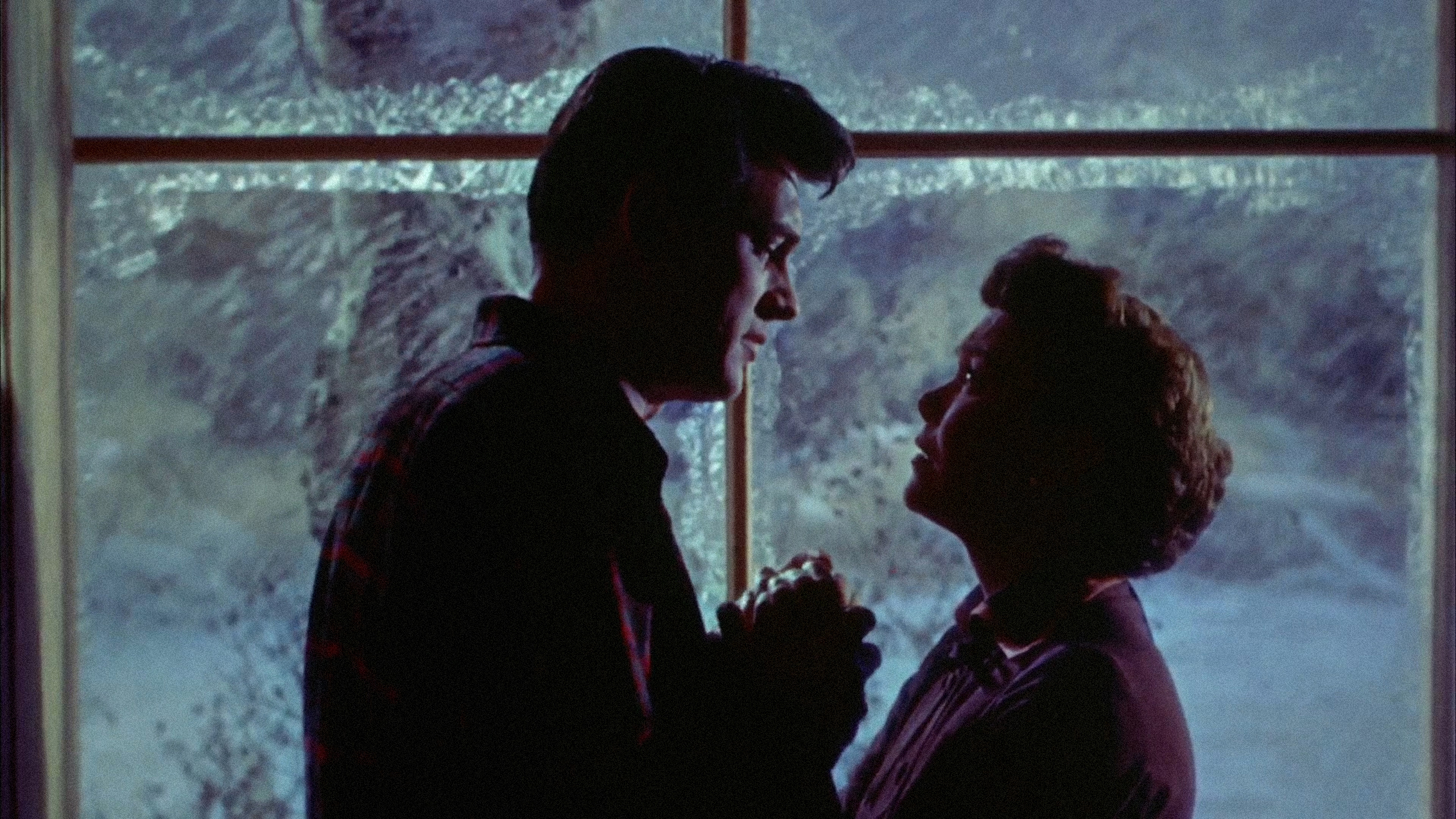
The situation of a widow or widower is an example of the feeling of being left out that finds us all. In the film All That Heaven Allows (Douglas Sirk, 1955), widowed homemaker Cary is left to live alone in her big family home in a prestigious suburb as her grown children fly the nest to live their own lives. The home that was made for the previous family lifestyle is now too big for one person and only serves to underscore the character’s loneliness. To the children’s dismay, Cary falls in love with a younger man, Ron. They had assumed that their mother would just go on exactly as before, residing in the same house and keeping their father’s things in their old places like in a museum, but then Ron goes and converts an old mill into a home for Cary and himself. In a 1950s Hollywood film, the conversion of the mill from an industrial building into a home was a more radical gesture than one might think from today’s perspective. The most visible change is a large picture window that is cut into the thick stone wall, signalling Ron’s natural and open-minded lifestyle. The bohemian flair of the new home draws a clear distinction from Cary’s previous country club lifestyle and begs the question about how well she will adapt to her new reality.
All That Heaven Allows offers various perspectives and reflections on architecture, but, most of all, it highlights the pressure of social expectations and, on the other hand, the possibility of resisting preconceptions by reinterpreting them and imagining alternative ways to live together. The solid structures of Ron’s mill make the old building modifiable. It is up to the people residing in it whether or not they can actually adopt new ways to live.
Doors and Encounters
We want architectural boundaries to be open to change, but, on the other hand, they should also provide stability and security. Aki Kaurismäki’s The Man Without a Past (2002) shows the significance of the boundaries of home in building a life. In the film, the main character arrives in Helsinki from another city, loses his memory as a result of a violent attack and has to restart his life from nothing. He moves into a shipping container in a container village occupied by homeless people by the sea and tries to find stability in an object that was designed for constant transit.
The framework of a rectangular container outlines a mini dwelling and demarcates personal space in the main character’s precarious situation. The stranger is tethered in place by the potatoes that he plants outside his container, which then define a dimension of time as well as location for the man as they ripen: a past as long as the germination period and the promise of a harvest in the future.
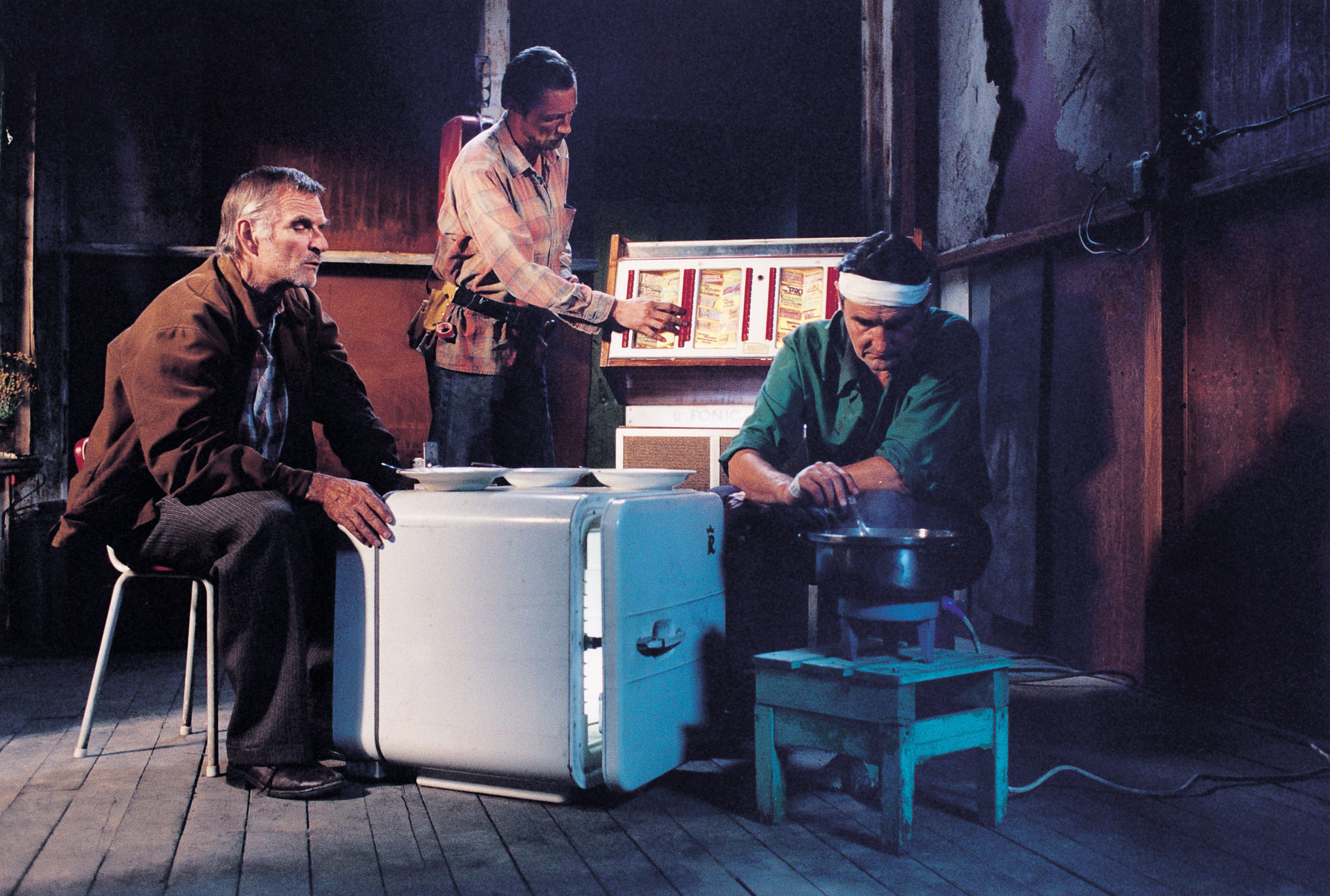
The most important element in the man’s container dwelling, however, is the door, which is mostly open and through which he can invite others to visit him. Without a door, the space would contain things and not life, but with the door the man can maintain his social connections. In fact, he immediately invites guests in to enjoy his home. In the world of Kaurismäki films, even the most modest of possessions are shared with others. The home is an anchor but also a medium through which a person can encounter the community and the outside world. In a film about homelessness and social marginalisation, the open door represents the idea of a world shared and of communality among people.
By examining the use of a specific architectural element and the consequences thereof in cinema, we can observe, quite tangibly, the significance of architecture as a medium of social situations. By focusing on doors, for example, we can study their use as a means to both keep others out of one’s personal space and to invite them in. In another film, people may be kept strictly outside the door, and the home turns its back on the outside world. In both cases, a key theme is the resident’s power to decide whether to share their space, and having a door allows them to express this decision to others.
Across the Threshold
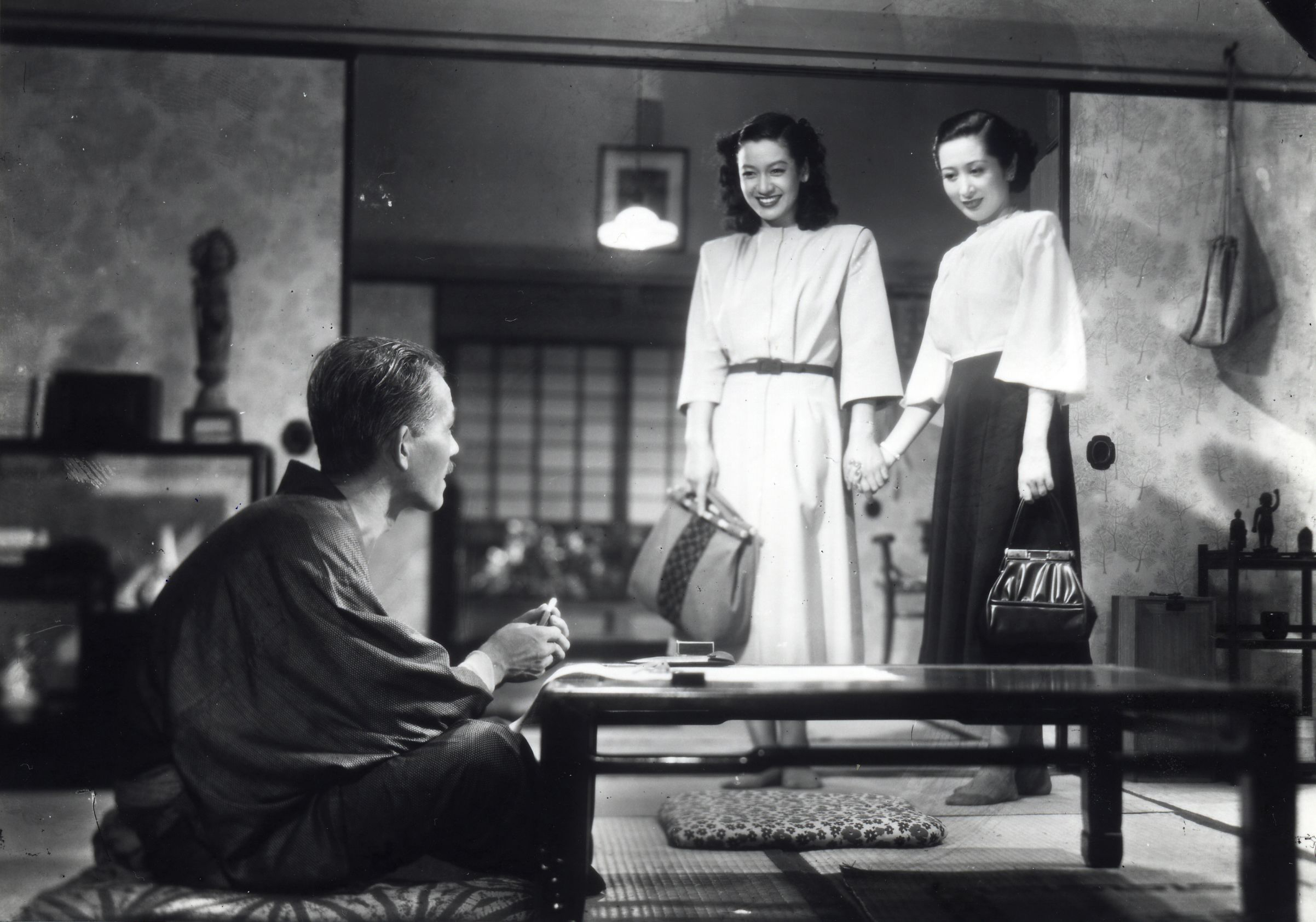
Stepping over the threshold is a distinctly architectural event. Crossing the boundary demarcated by a threshold can be a single impactful act of making an entrance or a repeated mundane occurrence. In a film, the act of entering, when repeated a number of times, can become something so familiar that even the viewer begins to expect the daily return home of a family member. This happens in the Japanese film Late Spring (Banshun, Yasujirō Ozu, 1949), in which a father and his grown daughter live in a house by themselves. The repetitive depiction of the comings and goings of the residents adds an air of familiarity to their cohabiting. Several times during the film, the father is shown sitting in the same place as the daughter comes home. Upon entering, the daughter greets her father from the door and takes off her shoes by the entrance, as is the custom in Japan, before stepping up to the main floor of the home in her stockinged feet. The repeating of the gestures of the daughter coming home makes them familiar to the viewer, gradually creating a sense of intimate domesticity.
In the film, the father tries to encourage his reluctant daughter to marry and start a family of her own. When the daughter finally does get married, she moves out and instantly disappears from the film altogether. It dawns on the viewer that, when the father now sits down in his familiar spot, no-one is going to step over the threshold anymore. The familiar movement of the home has stopped, and its parts, such as the front door, are no longer used as they were before. They no longer carry the same meaning. As is often the case in Ozu’s films, the storytelling in Late Spring builds on repetition, which makes even the smallest of changes seem like a surprisingly significant shift. Ozu first establishes the rules, after which he is free to vary them. Film scholar Andrew Klevan has stated that the effect that is created through repetition is particularly well suited for depicting the intimate experience of living together, which can otherwise be quite difficult to capture. Experiences such as routines, feeling at ease and settling in are pivotal in living in a home, but their emergence requires time and repetition.
Stepping over the threshold is associated with a conscious moment of change. Customs and presuppositions often do not become visible until something changes. In both Late Spring and All That Heaven Allows, grown children move out and their widowed parents find themselves in the midst of change. Both films came out shortly after the end of the Second World War and depict a time of great upheaval when it was possible, if not mandatory, to rearrange and reimagine one’s life. My interpretation is that the widowed characters offer a particularly good opportunity to discuss themes such as romantic love, loss and ageing as well as intergenerational differences and tensions. In a film, residential architecture is among the visual elements with which these themes can be expressed. A large empty family home is in poignant contrast with a single solitary character. The condition of the widow or widower invites the audience to consider the past as well as future possibilities all at once.
Open Endings
According to American film scholar Donald Richie, an open ending is the only honest way to end a film. An open ending leaves something unresolved, as if cut off mid-sentence, and the viewer is left wondering how the story continues. Sometimes the classic “happy” endings feel artificial in how neatly tied-up everything is, whereas open endings denote continuity instead of a conclusion.
Out of the films discussed here, Douglas Sirk’s direction closes with such a syrupy ending that it even comes off as ironic. In comparison, the happy ending in Aki Kaurismäki’s film seems genuinely sweet. The ending in Yasujirō Ozu’s film remains more open than the other two. In the end, things have worked out according to plan, the daughter has married and moved out of her father’s house, but the final scenes leave quite a bit of room for interpretation. Was this a happy or sad ending? Or could it have been both?
How are open endings viewed in architecture? Leaving things open-ended and up to anyone’s interpretation does not sit well with the general task of architecture to serve as a type of tool for rationalisation. The values held within the field highlight problem-solving and a well-controlled whole, which has more in common with the carefully tied-up endings in classic films. Design that is genuinely open to change would require an acceptance of unfinished and inadequate results. One type of architectural open ending can be found in the works of the Dutch structuralists, such as Herman Hertzberger, from the 1960s and 1970s. Hertzberger did not consider a completely open space or the absence of obstacles to signify openness to varied uses; instead, he favoured design strategies that utilised the repetition of similar spatial units that can be modified and extended. Such systems promise freedom within the established rules.
Leaving things open-ended does not sit well with the general task of architecture.
Invisible Diversity
So, when my friend suggests that the ending of a film is only the beginning, what he is actually hoping for is to have more dimensions to the story. He is suggesting that we shift our attention from straightforwardly advancing storylines to complex and tricky situations that may not have a clear direction, solution or visible result. My friend wishes that films would be more honest in facing the diversity, messiness and imperfection of the world.
The same wish could be extended to architecture. The process of building can also be viewed as new construction that concludes with a single culmination point or as the constant, repeated upkeep that occurs afterwards. The objective of maintenance and repairs is usually to preserve what is already there and not to leave a new visible imprint, which is why people may not pay as much attention to it. However, the focus in recent years has increasingly shifted towards also emphasising these processes and sides to architecture that are more difficult to discern. We are currently living in a time of upheaval that is different from the one that came after the Second World War. The ecological crisis is changing our outlook on resources, which drives us to adjust and apply our activities within the already existing built framework. In addition, the population is ageing, the nuclear family model and forms of housing are transforming, and the boundaries of home should be flexible in order to accommodate these changes. We need a way to react to the changes and broaden our conventional mindsets.
Fiction is one way of approaching the notion of change. Literary researcher Hanna Meretoja has studied the ways in which fiction broadens our perception of what is interesting or possible. We need channels with which to face and imagine different ways of being. The danger in a too narrow discussion is that some dimensions of architecture – of how it is experienced and of its multitude of meanings – can remain completely hidden. What we are then left to work with is a familiar view of neutral, universal architecture and its presumed uses. In other words, the view of the people for whom this type of architecture is a good fit. Or at least was at some point in the past. The rest of us just have to make do and adjust. ≤
Also these might interest you


Advert