Alvar Aalto’s environmental thinking was ahead of its time
There are features in Alvar Aalto's design work that foreshadow later efforts at sustainable design, a new book argues.
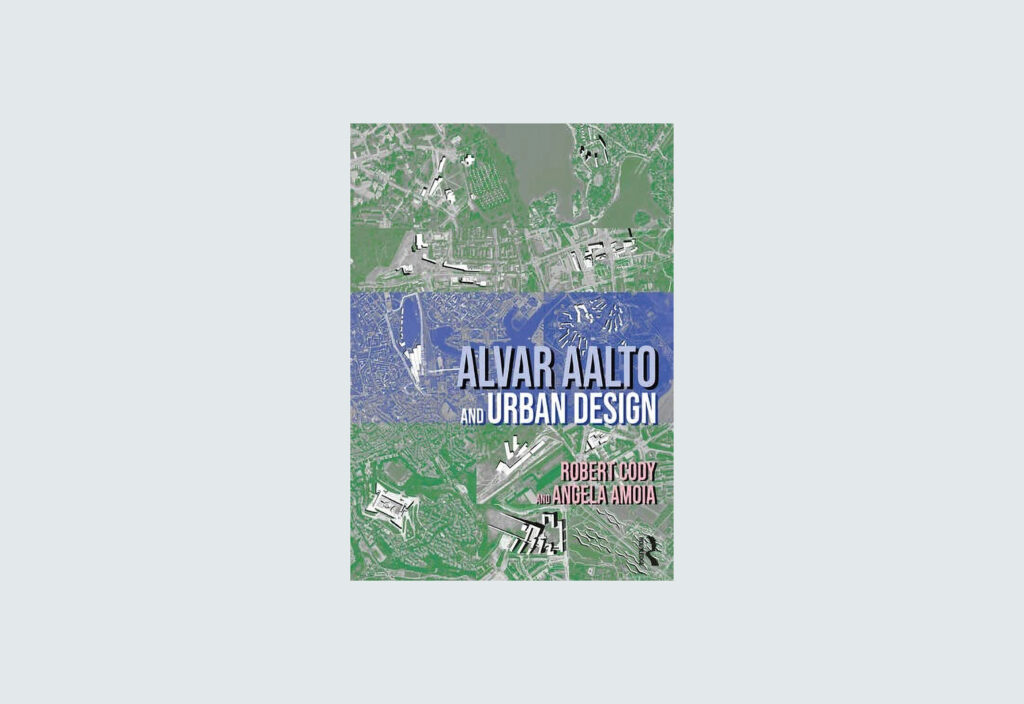
Whilst much attention has been given to Alvar Aalto’s object and building designs, there exists limited extended studies providing an in-depth analysis of his planning and urban design approaches. Drawing on a multitude of sources, including unpublished material uncovered through archival research, the New York based authors and practising architects Robert Cody and Angela Amoia bring to light the remarkable innovation and pragmatism of this largely unexplored area of the architect’s career in the recently published title Alvar Aalto and Urban Design.
Offering a comprehensive review of projects, featuring many unrealised schemes, the author’s focus their analysis to explore themes of ecological sustainability and socially resilient urban design towards addressing key societal challenges faced by architectural practice in the 21st century. As such, in addition to numerous historical and contemporary comparative case studies, the book offers a richly contextualising review of relevant discourse relating to environmentalism and urbanism.
Within the context of the environmental crisis, Aalto’s biophilic design approach has only come to resonate more strongly for architects, planners and urban designers of our contemporary Anthropocene era. With the authors positing the book as an example of post-humanist discourse, viewing humans as one of many species inhabiting our planet, they acknowledge that “labelling Alvar Aalto a post-humanist would be a stretch.” However, by re-evaluating his ecologically conscious design methodology through a post-humanist lens, the authors distil how traits embodied in his planning and urban design approaches can be seen to have anticipated environmentally sustainable practices in their ability to mitigate, rather than compound ecological degradation.
Within the context of the environmental crisis, Aalto’s biophilic design approach has only come to resonate more strongly for architects, planners and urban designers.
The concept of socially resilient urbanism re-emerges throughout the book, with the authors emphasising that “urban development is not just about physical structures, but about cultivating thriving urban landscapes.” They explain that Aalto’s design philosophy emerged as an expression of the optimistic aspirations of the young Finnish state, embodying the ideal that “the everyday citizen whose experience, dignity, and well-being stood at the heart of a humane and democratic society.” Through the development of a multi-layered contextually sensitive appreciation of geology, geography, economics, politics, history, culture, and nature, Aalto’s urban interventions were able to harmonise physical planning and cultural aspirations, presaging what would later come to be recognised as a Critical Regionalist approach by half a century. From the many projects realised in partnership with leading Finnish industrialists, to his engagement with post-war reconstruction and the displacement of Karelian refugees, the book provides an account as to how planning and urban design approaches of Aalto’s practice would play a defining role in fostering a progressive modernisation of Finnish society.
Although it is possible to find instances when the authors touch on areas of discussion subject to previous enquiry, for example, the ecological considerations of Alvar Aalto’s design approach, their level of intellectual scrutiny and engagement with key contemporary issues enables the book to provide a highly perceptive and purposeful commentary which avoids familiar readings.
Through its inclusion of fresh analysis and new material, Alvar Aalto and Urban Design stands as a valuable addition to Aalto discourse, developing a more complete understanding of his life’s work. Perhaps more importantly, as a credit to the author’s clear ethical orientation, it provides the opportunity for Alvar Aalto and his socially benevolent idealism to inspire and guide the next generation of architects, planners and urban designers towards a more socially and ecologically sustainable future.
Robert Cody & Angela Amoia:
Alvar Aalto and Urban Design.
307 sivua. Routledge 2025.
Also these might interest you

Advert