Advert


Geopolitics is thought about a lot in the architectural field, but rarely talked about
Italian Daniele Belleri has written a series of articles for the Finnish Architectural Review website about the influence of geopolitics on Finnish architecture. In the final article of the series, he discusses how the architectural field should act in the changed geopolitical situation.

It all started with a question: At a time of global upheaval, how is the relationship between Finnish architecture and geopolitics? It quickly morphed into another one: Why is this very topic nearly absent from the public debate? The questions led to a series of articles “Finnish architecture in the shadow of geopolitics,” the last of which was published on the Finnish Architectural Review website this week.
Among tens of conversations I organized in Finland in the last nine months, the five texts chosen for publication ended up featuring museum director Pilvi Kalhama, design entrepreneur Mirkku Kullberg, ALA Architects partners Juho Grönholm, Antti Nousjoki and Samuli Woolston, and urban planning researcher and teacher Hossam Hewidy. Historians were the single most represented category, albeit with markedly different focuses: restoration and the long durée of architecture (Panu Savolainen); geography and the presence of empire between the 19th and 20th centuries (Markus Lähteenmäki); the ideology of postmodernism and its relationship with the architectural typology of libraries (Anni Vartola).
There are, I reckon, at least three good reasons for wanting to recentre the discussion on this subject. The first one is about unearthing a different history. Finnish architecture has always been political, although in ways that might appear to express limited agency. It supported, and seldom challenged, the country’s successful nation-building process. But even that reading is incomplete. One must rediscover the more controversial, geopolitical tensions within the discipline.
Dealing with the figure of Alvar Aalto, scholars from Pekka Korvenmaa to Bruno Maurer and Teppo Jokinen to Eeva-Liisa Pelkonen – her Architecture, Modernity, and Geopolitics (2009) is the book I have returned to most – have depicted him not only as an extraordinary designer, but also as a charming networker and communicator, able to switch between intellectual engagements, business connections, and sharp comments on foreign affairs.
This perspective allows us to dismantle any residue of the obsolete “hero architect” narrative, where one man (male) alone appears to overcome all sorts of obstacles, unaided by any collaborators. Instead, the history of Alvar along with Aino and Elissa Aalto is one of a deep understanding of architecture’s relationship with society, including its entanglement with political interests.
The Baltic Sea countries are setting an example
The second reason concerns where the world is heading. Today, geopolitics is exerting increasing pressure not only on Finland, but on the whole of Europe.
Indeed, Helsinki is well positioned to offer instructive models. As British journalist Oliver Moody noted in the traveling reportages of Baltic: The Future of Europe (2025), this wider region has articulated “a compelling idea of what Europe could be: more hopeful, more assertive in defence of its values and interests, more conscious of solidarity with other liberal democracies, more open to the potential of technology, more confident of its own distinctive strengths, less constrained by fear.”
Finland occupies a distinctive place as the Nordic country most closely integrated in the EU while also best able to understand Eastern Europe’s security priorities. The growing international voice of President Alexander Stubb reflects not only longstanding diplomatic skill, but the country’s current geopolitical authoritativeness.
If this point, then, is primarily about political thought and EU sovereignty, it ultimately returns to architecture. Taming the excesses of capitalism; fostering a relationship with the non-human world to counter the climate crisis; using public libraries to reclaim the value of publicness in cities: all of it while holding to unequivocal defence of liberal democracy. Why not think of these as the pillars of an architectural contribution to Europe’s autonomy?
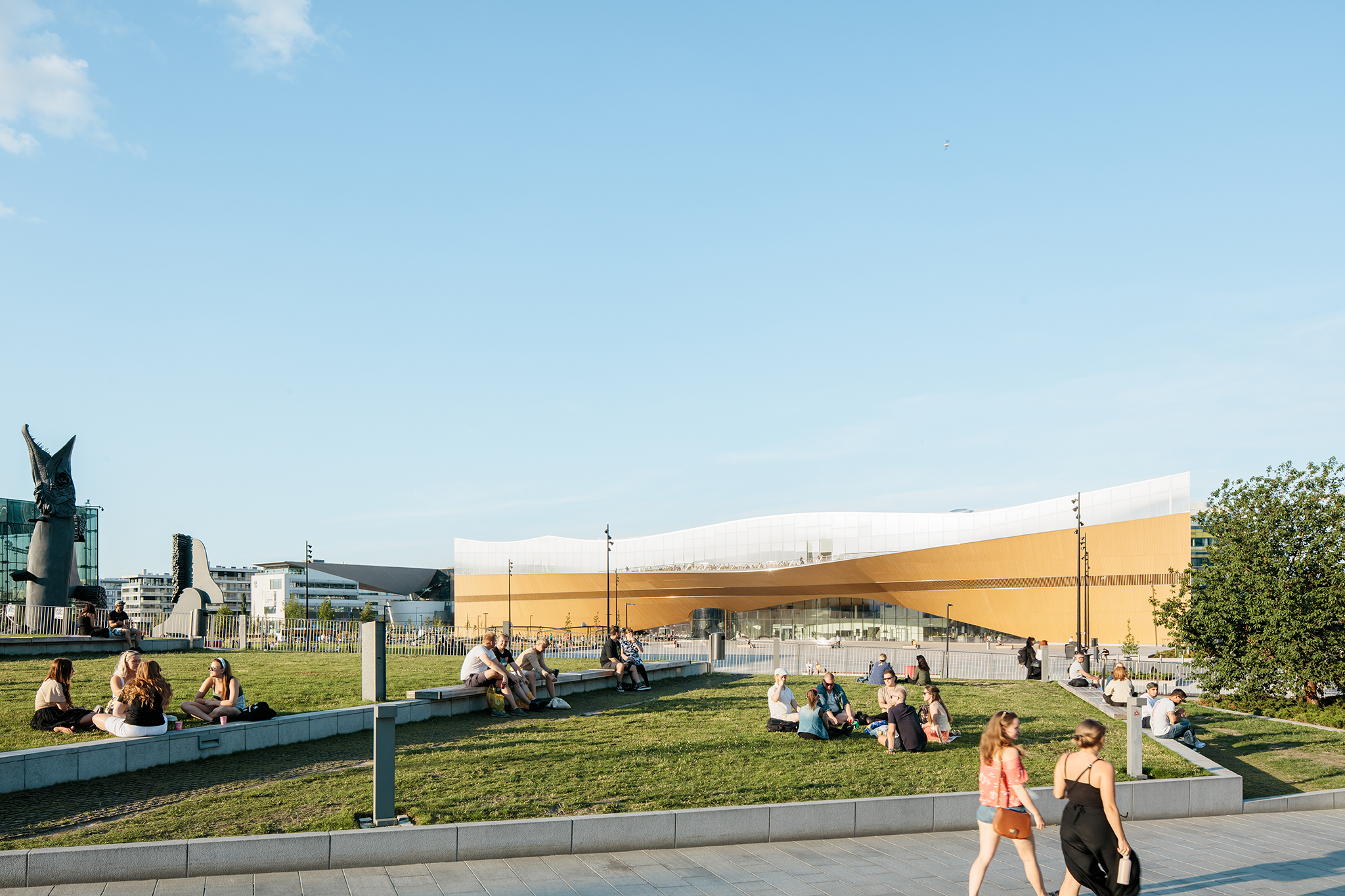
The third reason concerns business opportunities. Here, the picture has been bleak for a few years already. Business mergers in Finland have resulted in the establishment of construction companies that might be large in scale but frequently small in societal ambitions: the shift toward technical and engineering-driven work may make financial sense, but does not bode well for any serious vision of the built environment. On the opposite side of the spectrum, smaller firms struggle in a scenario where anonymous public competitions – which long sustained the profession and gave new architects opportunities to emerge – are declining in number.
In that context, reports from this year’s Mipim real estate fair in Cannes hint at a broader demand for ideas that can counterbalance the uncertainty shaping Europe. Framing Finnish architecture geopolitically could therefore also make commercial sense – no wonder that several firms in Denmark and Norway are already leveraging this discourse to establish their market value proposition and try to persuade key stakeholders, from city officials to investors, that their design is somehow better equipped to address today’s societal challenges.
Communication is crucial
Having listed the three reasons for change, the key question is how to get there. Ultimately, this is a question of advocacy: reclaiming the willingness to engage with all the layers that shape architectural practice. Finland needs impresarios, to borrow a term from Markus Lähteenmäki: agents that act as catalysts at the intersection of architecture and social impact.
Additionally, communication is going to be crucial. Facing a hyper-mediatized cycle of image production where designs are often valued less for their substance than for their ability to circulate, architects must find ways to engage with the system without overestimating its real significance. A certain kind of visibility has become cheap and automatic – awarded to almost anything that feeds the appetite for novelty.
If radical voices are to emerge and be heard, mid-sized architecture offices might be the best equipped to do so.
To participate in shaping discussions about the future of society, agents of architecture in Finland should deepen their media engagement. We can look at those areas and initiatives where some of the most influential architects of this century have carved space for authority, starting with Rem Koolhaas and the hybrid model of his OMA-AMO office. Curating exhibitions, contributing opinion pieces to the general media, advising NGOs or businesses on urban issues: these are realms where cultural interests and self-promotional motives powerfully reinforce one another. Why are so few Finnish architects engaging with them?
If radical voices are to emerge and be heard, mid-sized architecture offices might be the best equipped to do so. They are the only ones that can both afford to take a clear stance on public affairs and sustain their theoretical views with a built portfolio.
Tradition of architectural thinking
Personally, it would be impossible to list everything learned while working on this series: each interview privileged the passages most unexpected, sometimes even surprising. But one thing stood out regardless of who was talking: a vision of national identity that impressed me for its generosity, selflessness, and depth. All conversations ended up dissecting nuances of Finnish collective psychology and the meaning of social action, more than formal manifestations of physical objects. Trust emerged as a recurring theme, with design seen as a component in preserving it, not with an autonomous agency but as part of a broader set of societal actors investing in creating spaces and architectures that uphold the importance of publicness.
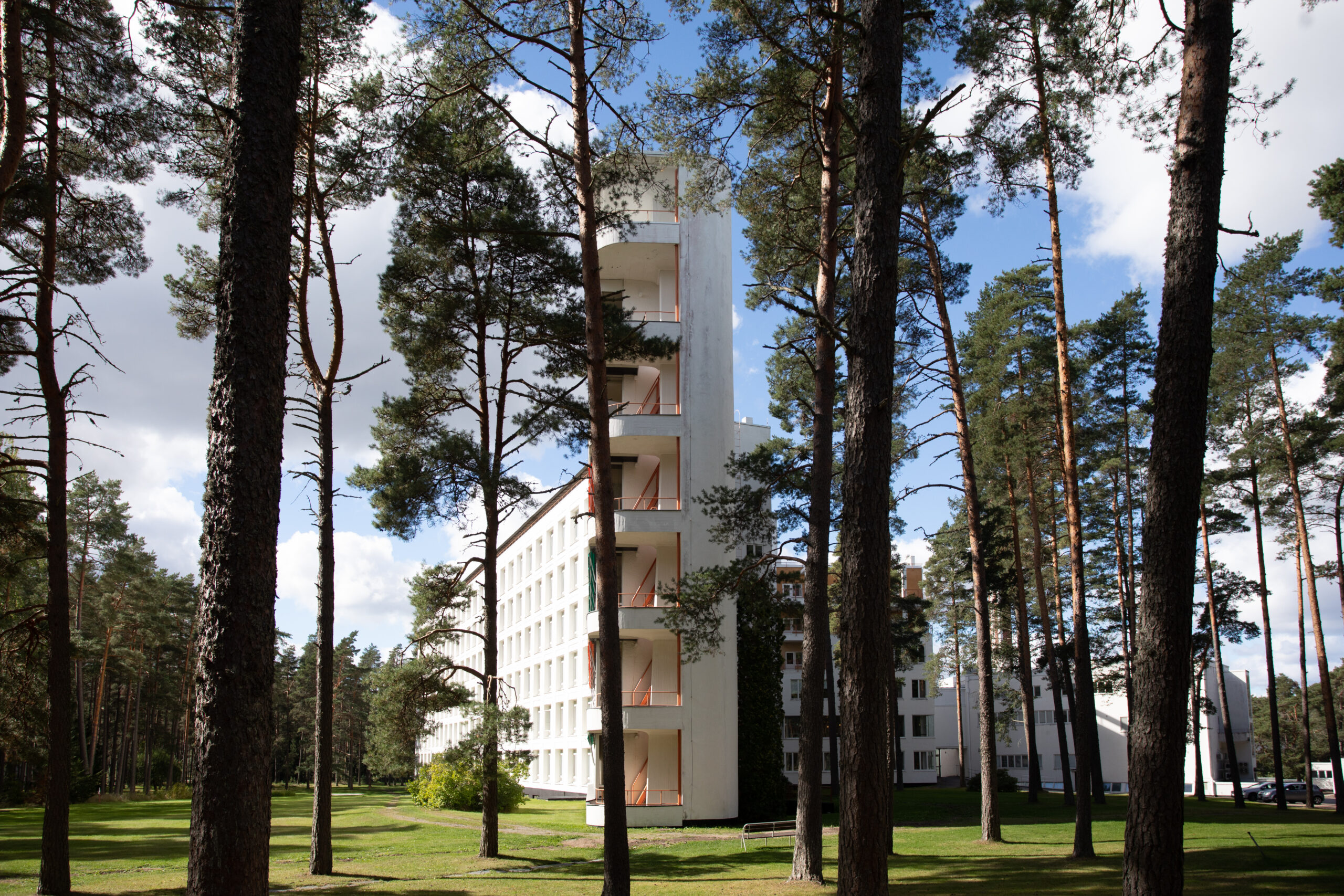
What struck me most was a sense of latent political energy: admirable, if largely unannounced. Well before this series began, my interviewees were already reflecting deeply on the relationship between architecture, national identity, and the wider world – but without vocalising it much. If I were to condense their diverse responses into a single common denominator, it might sound something like: “We think these things about geopolitics without realizing we think them, and we rarely find ourselves in a context where that elaboration is required.”
At times, during these conversations, I seemed to glimpse the legacy of a great tradition of architectural thinking in this country. It might come down to a sensibility that, while pivoting on feeling and perception, does so at a collective rather than individual level: political in substance, even when it doesn’t declare itself as such.
The gap between that latent energy and its public expression is precisely where this series has tried to intervene. Whether it succeeds is, as always, for the reader to decide.
This is the concluding article of the series "Finnish architecture in the shadow of geopolitics", published on the Finnish Architecture Review website during the winter and spring of 2025–2026.
Also these might interest you
Advert