Oulu preserved its modern icon
The Oulu Central Library was extensively renovated after 40 years of use – yet it still looks and feels familiar, writes Helena Hirviniemi.
Oulu Central Library Refurbishment
JKMM Architects / Maren Nielsen, Laura Hämäläinen, Teemu Kurkela
Location Kaarlenväylä 3, Oulu
Gross area 7 330 m2
Completion 2025
Original building Marjatta and Martti Jaatinen 1982
More photos and drawings of the project →
OULU CENTRAL LIBRARY is located in the heart of the over 400-year-old city. All around are layers and signs of the city’s long history – the remnants of the white wooden city of the north. The library, which reopened in late 2025 following its renovation, offers even wider views than previously of the magnificent Oulu River estuary landscape below the Merikoski Power Plant and the islands in the estuary. The spaces of the building have been extensively opened up to the public, and the city’s inhabitants have enthusiastically welcomed the renewed spaces.
Here I will examine the familiar building and its renovation through the lens of the Madrid Document published in 2011 by the cultural heritage expert organization ICOMOS, the Finnish translation of which was aptly published at a seminar held in the library’s Pakkala Hall in 2014. The Madrid Document “seeks to contribute to the appropriate and respectful handling” of twentieth century architectural heritage of the. According to the document, the treatment of a site should be based on the recognition of its values, an understanding of its technical and architectural solutions, authenticity and integrity, the use of appropriate protection measures, the subtlety of changes, and the documentation and communication of the process.
The strong periods of growth of the city of Oulu date back to the post-war period and especially to the 1960s. This entailed upheavals in urban planning and the urban structure. The aim was to reorganise the fragmented waterfront area and concentrate there the growing city’s new administrative and cultural buildings. In 1962 the city organised an architectural competition for the design of a new monumental centre. The competition was won by the proposal “Saari” by architects Marjatta and Martti Jaatinen. The proposal included a rectangular-shaped theatre, city hall, concert hall and an office tower located on a rectangular infill island surrounded by a reflective body of water, as well as a plan to replace the waterfront blocks with seven-storey office buildings surrounding the market square.
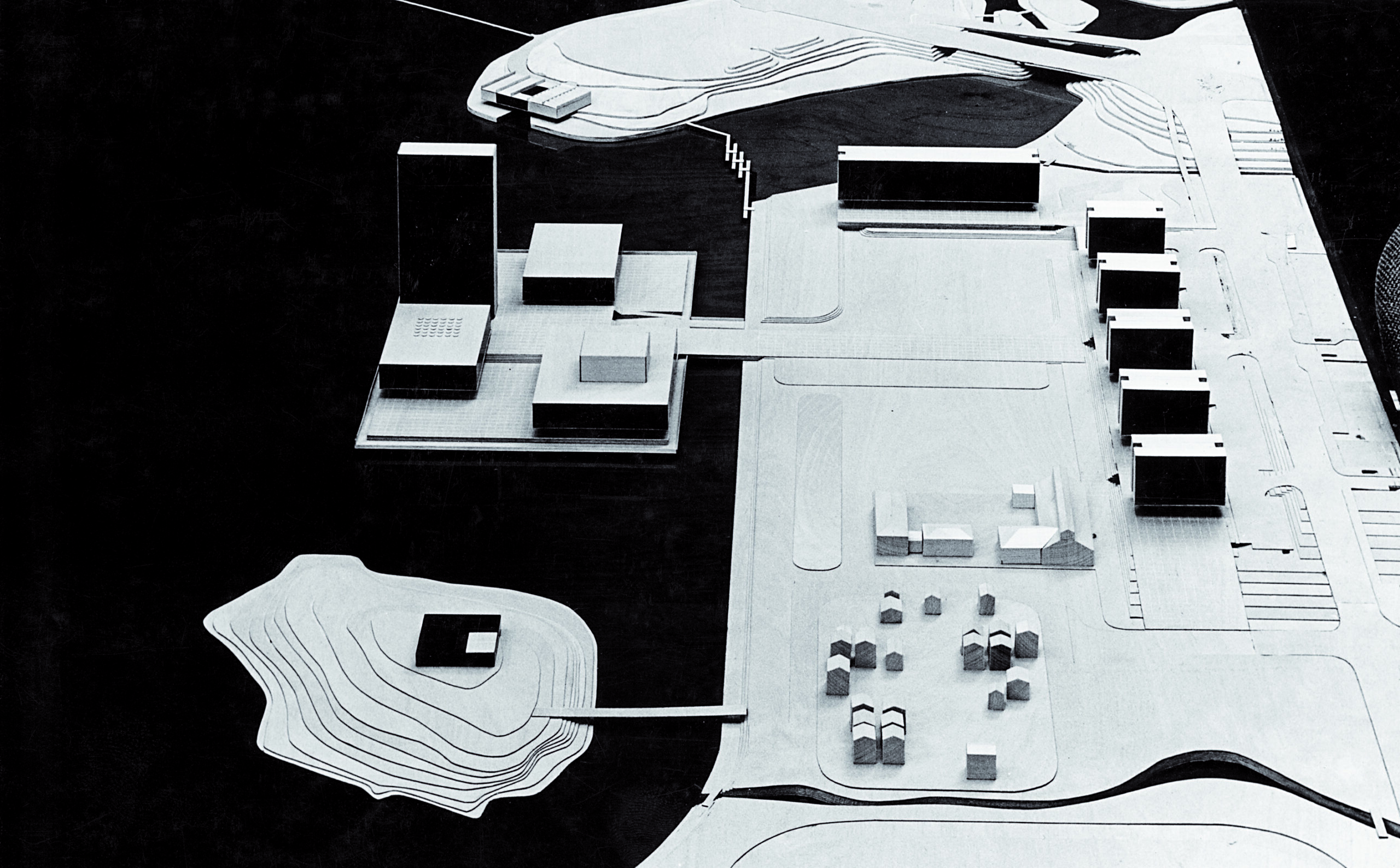
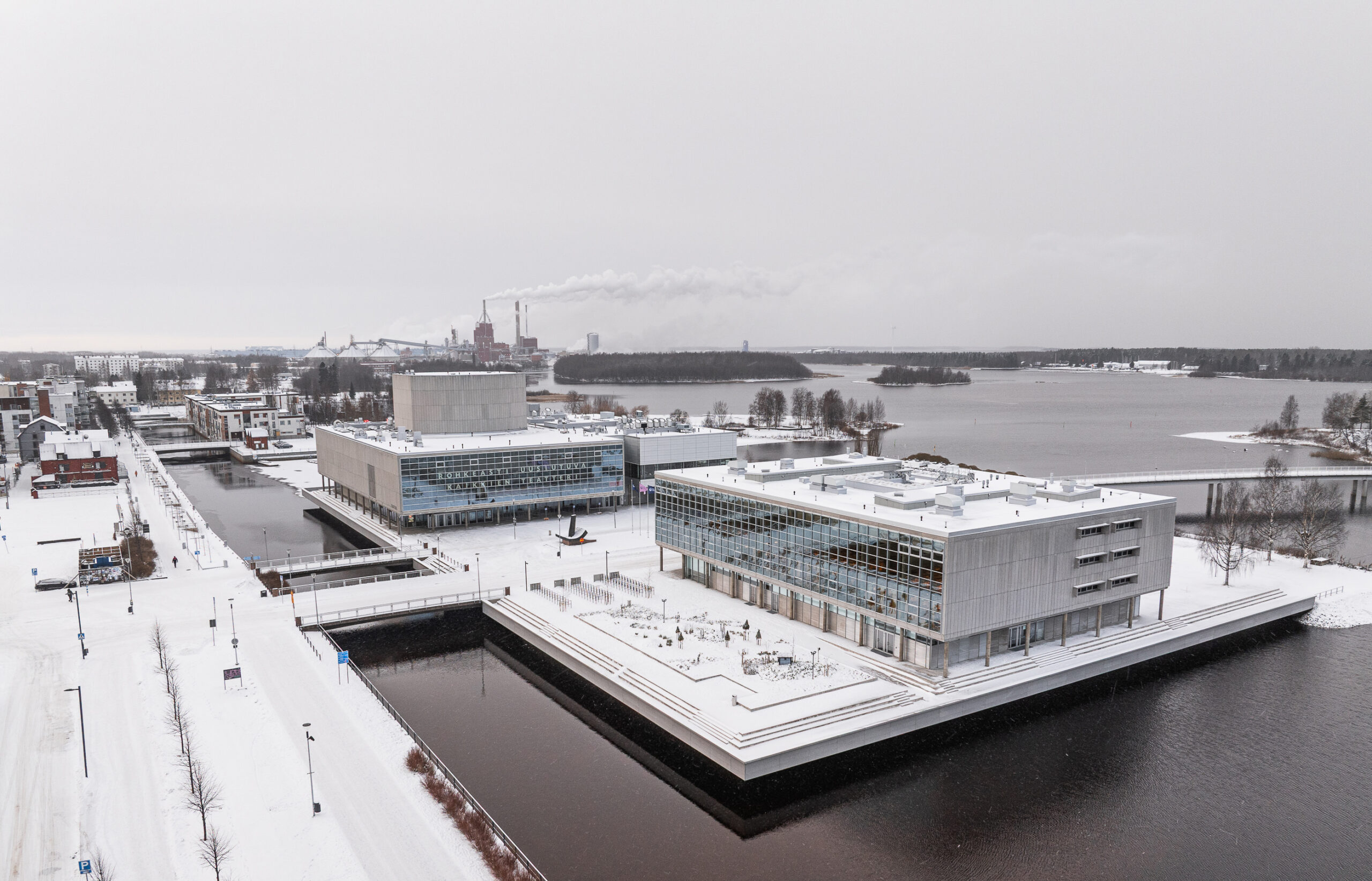
Blue Island. Photo: Toni Pallari
The theatre was completed in 1972 in accordance with the Jaatinens’ design, but in place of the concert hall it was decided to build a new regional library, maintaining the volume of the concert hall as proposed in the competition entry. Opened in 1982, the building took library services in Oulu to a whole new level and was one of many new regional libraries in Finland at that time. The new theatre and library buildings, which exemplified the high-quality, minimalist concrete architecture of the time, were like large cruise ships anchored along the edge of the market square.
At around the time the theatre was completed, a strong building preservation movement was launched in the Oulu University Department of Architecture to protect the blocks between the streets Rantakatu and Aleksanterinkatu. The process was a long-drawn one, and much was destroyed and burned down. Eventually, spurred on by the new Building Protection Act, a conservation plan was drawn up for the area in 1996, and the idea of replacing the waterfront blocks with office buildings did not materialize. Currently, the entire waterfront area forms a nationally valuable cultural environment site, which consists of a historically layered entity – including the modern parts – but strangely enough the theatre and library are not protected, even though they undoubtedly represent high-quality modern concrete architecture in Finland.
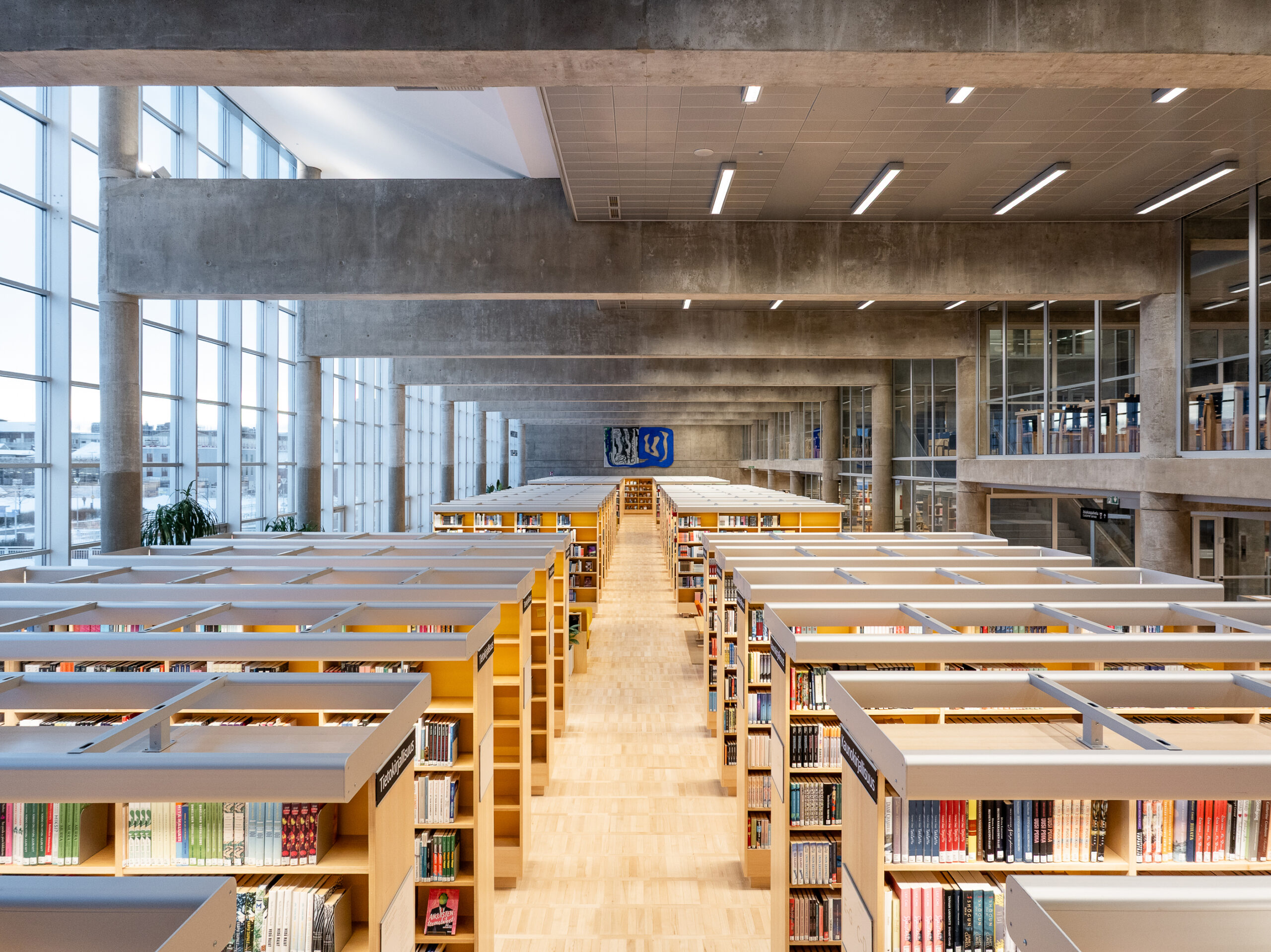
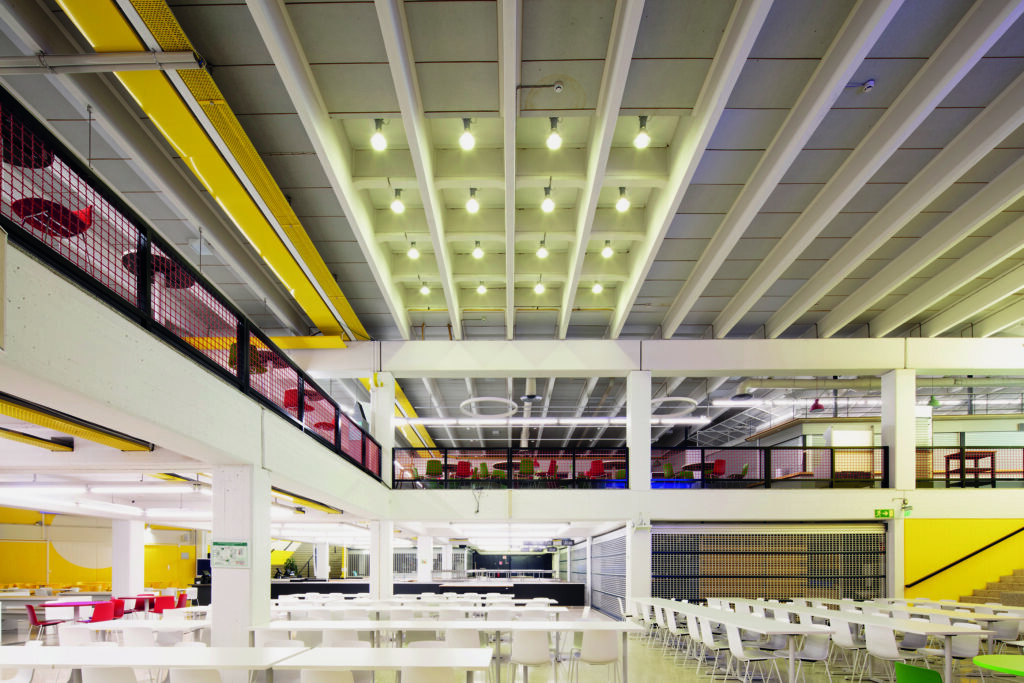
When the Oulu Central Library renovation and restoration project was initiated, the library had already operated for 40 years without major renovations. The library is the city’s most popular cultural building, offering versatile services for all ages and serving as a low-threshold meeting place and event venue. The originally very skilfully designed building was modular and adaptable. In its architecture, clarity, restraint, clean lines, space and light take centre stage. The materials – cast-in-situ and precast concrete, aluminium, glass and wood – are durable, age beautifully, and the quality of the original construction work is of a high standard. The structural and spatial layout, and consequently the entire architectural design, is based on a 6 x 6 metre modular grid, thus determining the locations of the load-bearing columns, beams and walls, allowing for flexible floor plans and the free placement of windows. The exterior architecture is characterized by sparse and refined details, with materials including polished terrazzo, glass and aluminium. The lowest floor is recessed. The library’s function is exemplified by the large glass wall in the lending hall, which opens out towards the city like an open book.
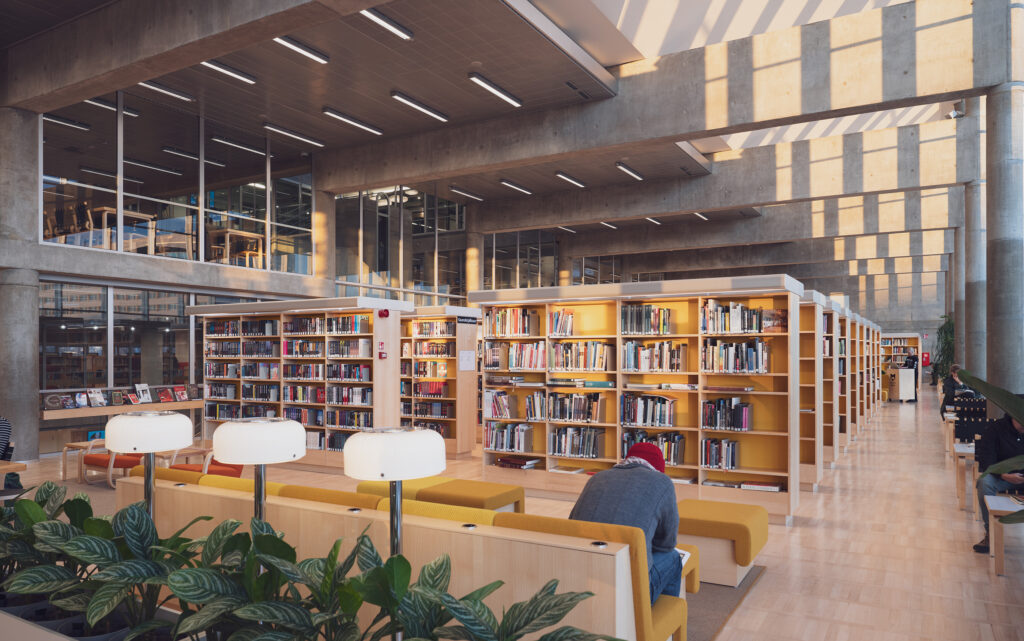
The architecture is complemented by the interior design created by the Jaatinens together with Studio Nurmesniemi. It is based on the use of wood, durability and the beautiful aging of materials. The library was originally designed with a lot of built-in furniture made from ash, aluminium and black linoleum. In addition, Artek furniture was used. Bright accent colours were used in the upholstery and details: red in the children’s section, yellow in the adults’ section and blue in other areas.
The state of preservation of the central library was of a high standard, with no significant damages. This provided an excellent starting point for a renovation that preserves as much as possible, which was indeed the objective of the City of Oulu that commissioned the project. According to project manager and architect Sanna Pääkkönen, the building was treated as a protected building, even though it lacks protected status. The objectives were defined and the implementation methods were refined throughout the project in collaboration with the designers, the museum authorities and the users, all within a tight budget.
Project architect Maren Nielsen of JKMM Architects brought valuable expertise in designing complex library buildings to the project. The challenge was to update the building services and integrate the significantly increased number of installations into the structures in accordance with the original concept, ensuring that all surfaces remained intact and that the technical systems are concealed within the structures. This meant, among other things, that the aluminium cassette ceilings which were a defining feature of the interior design had to be dismantled and replaced with identical panels from the same manufacturer.
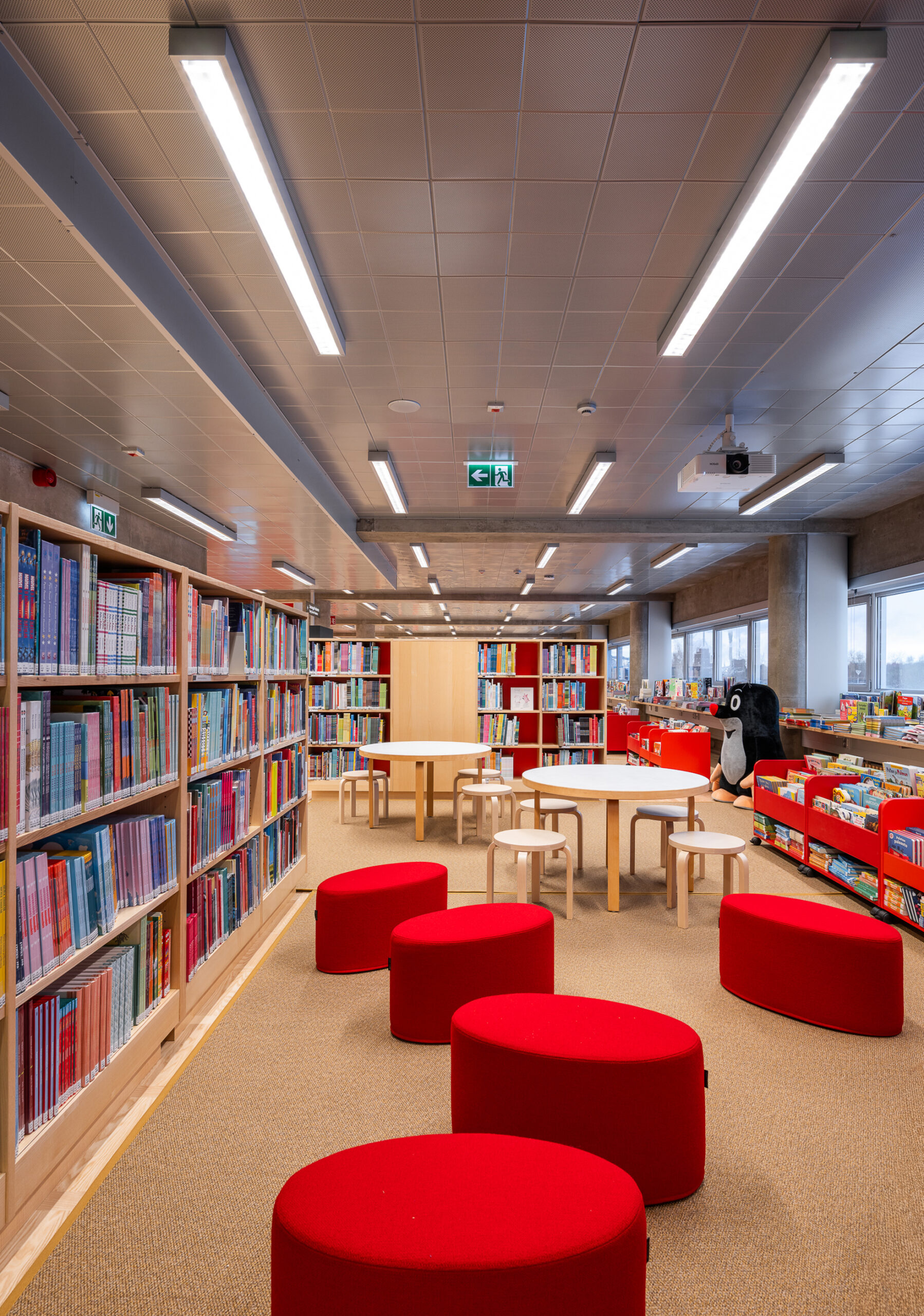
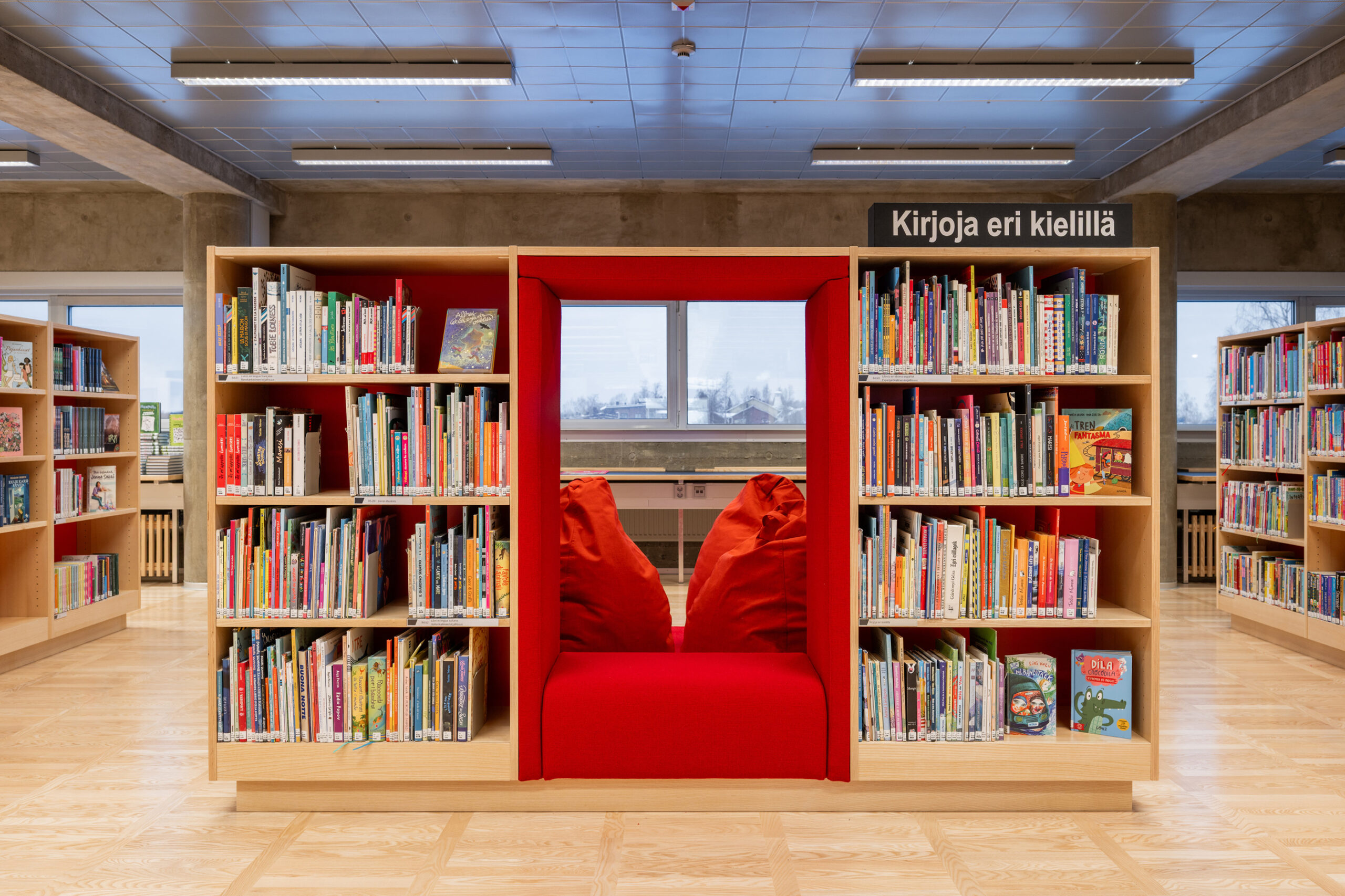
The high quality, adaptability and sustainable design of the original building are fully realised today, and the library still serves its purpose exceptionally well. There have been some changes in the use of the spaces, the most significant of which include the conversion of the newspaper reading room into a café, the relocation of the book returns point to the ground floor and the addition of different types of workspaces and meeting rooms. The expansion of the facilities and the changes in functions were achieved within the original volume by eliminating the book storage spaces and updating the staff workspaces to align with the principles of an activity-based work environment.
So, what makes the building familiar and recognisable? On the ground floor, the entrance continues as an axis running through the entire building, and a concrete staircase rises from the middle, with the various floors opening up through extensive glass walls. All visible surfaces are essentially original or similar to the original, the view is familiar and impressive, and even patina is allowed to show. The original ash parquet floors that are particularly characteristic of the interior have been sanded and supplemented with new sections. The iconic lending rooms remain unchanged, although small seating nooks have been added between the shelves. The interior design remains faithful throughout to Nurmesniemi’s original design concept, and the furniture has been repaired and adapted for its new uses. The defining features of modern architecture and the building’s inherent values have been identified and successfully preserved. The library will serve well for another 40 years.
All visible surfaces are essentially original or similar to the original, the view is familiar and impressive, and even patina is allowed to show.
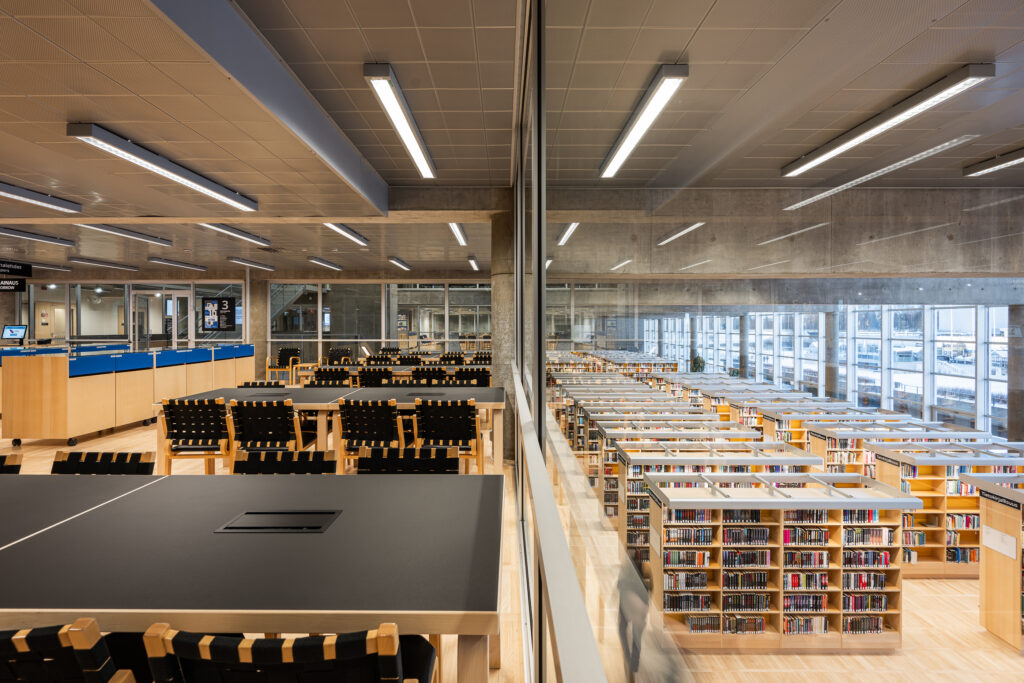
The library’s renovation and restoration have been carried out in the true spirit of the Madrid Document and in accordance with its principles. One can therefore rightly say that it is a restoration of a significant modern building, where the objective has been to preserve the building’s values and architectural characteristics.
The design first proposed by the Jaatinens in their architecture competition winning entry, including the option of an office tower, has been preserved for decades in the detailed plan for the area, and it now seems that it will be implemented as a 22-storey hotel building called the Terwa Tower, following the original idea quite closely. The city would gain yet another landmark and the architects’ vision would be fulfilled, but some of the fine views of the river estuary would be lost. Is the tower an essential part of the architectural concept for the monumental centre or a relic of the excessive optimism of the 1960s? At the present time I would leave the tower unbuilt and let it remain part of the area’s planning history.
Also these might interest you

Advert