Oulu under construction
To mark Oulu’s year as the European Capital of Culture in 2026, the Finnish Architectural Review dedicates an issue to the current topics related to architecture and urban planning in Oulu.
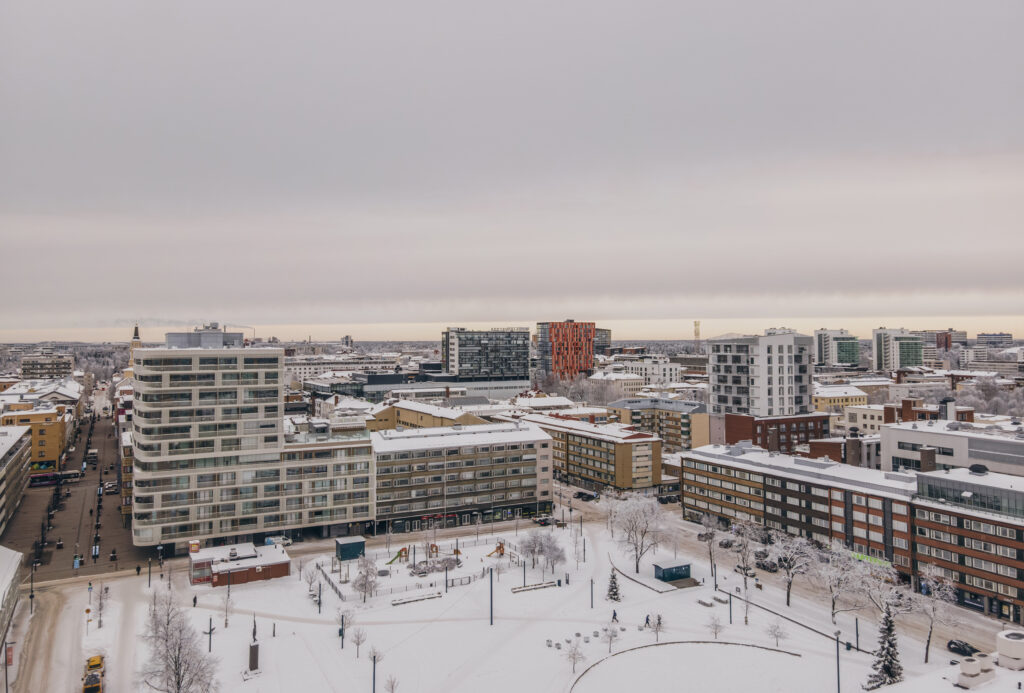
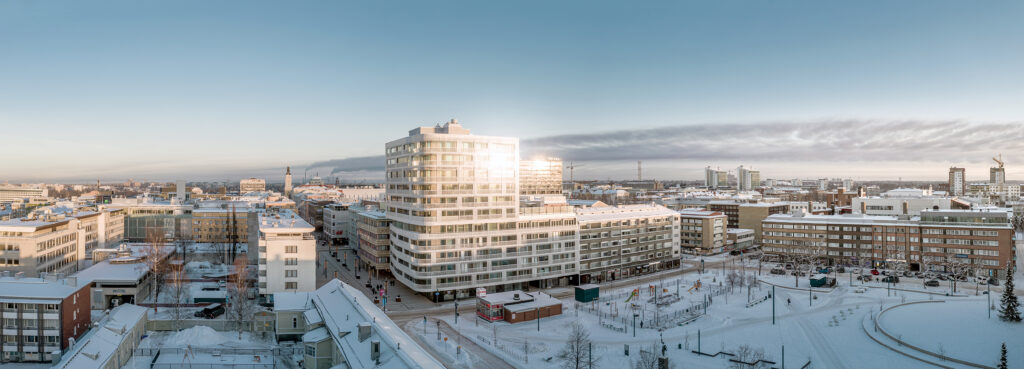
OULU’S YEAR as the European Capital of Culture was launched in January, momentarily directing keen international interest towards the city. To mark the occasion, this issue is also dedicated to the current topics related to architecture and urban planning in Oulu. Even though the Finnish Architectural Review has been following the development of Oulu for as long as it has been published, only one instalment to date has been exclusively devoted to the northern city. The issue of 3/1972 is a snapshot of the growing pains experienced by a city that had more than doubled its population in twenty years: idyllic old wooden blocks were being cleared out to make room for multistorey housing, commercial complexes and administrative buildings, while several residential neighbourhoods, a university campus, a university hospital and industrial facilities were rapidly being erected outside of the city centre. The monumental centre designed by Marjatta and Martti Jaatinen, then, shaped the Oulu Market Square into the most expansive urban space in Finland of its time.
The drastic scale of the change prompted the then Editor-in-Chief, Jussi Vepsäläinen, to ask, “was it really necessary to tear down all the buildings from past centuries, build a 22-storey office building on the flat seashore, move the university out to the woods, plan 15-storey blocks of flats in the Tuira area, formerly occupied by small homes, and force children to grow up in an area where the trees have died as a result of industrial pollution?” Similar reflections have also been elicited by many of the recent projects in Oulu, such as the chunky residential towers in the city centre and the designs for a new high-rise hotel next to the Central Library.
Leafing through the 1972 Oulu issue, one cannot escape the realisation of how short-lived many of the buildings that were featured on the pages turned out to be, some of which were only in the planning phases at the time of publication. For example, the Oulu Swimming Pool (Risto Harju 1974) was torn down last year to make way for the new Oulu Water Exercise Centre. As for the university, it is once again moving out of the Linnanmaa “woods” to Kontinkangas, where it will replace a condemned hospital building (Reino Koivula 1976). An international architectural competition for the new university campus will be launched this spring. Luckily, we also have outstanding examples in Oulu of renovating buildings from the same era, such as the Central Library Saari refurbishment that is featured in the current issue.
The relocation of the university to Kontinkangas opens up a question about the future of the Linnanmaa campus that remains to be answered. In their article, Anna Koskinen and Salla Sinisammal discuss the impacts of this decision from the perspective of both the nationally unique structuralist campus milieu (Kari Virta 1971–1998) and the residential and workplace areas relying on it. A high technology cluster of international significance has been forming next to the university campus since the 1980s, the latest addition to which, the new Nokia Campus, is presented in the current issue. Its status within the city will also inevitably be affected by future decisions regarding the use of the wider Linnanmaa area.
In recent inventories of the public service network, such 1980s buildings, which are now facing extensive renovations, represent precisely the kind of expense item that is easy to cross over from the balance sheet.
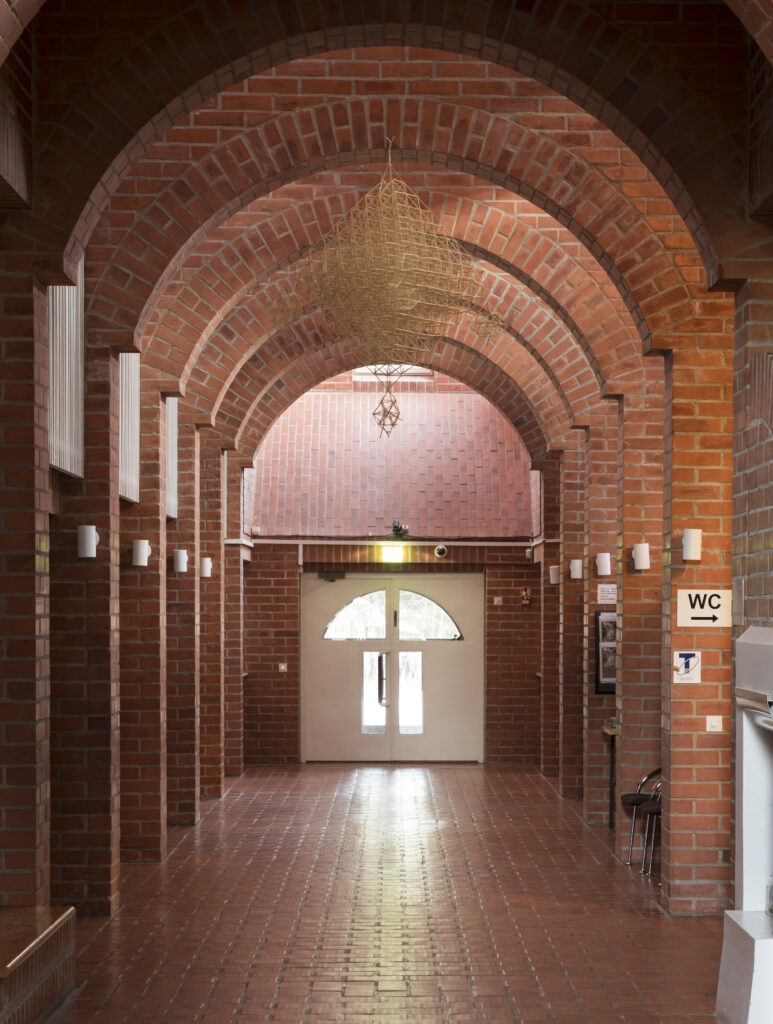
The buildings featured in the 1972 Oulu issue represented the rationalist style that was typical of the time but did not have much of a connection to the conditions in Northern Finland. The counter-reaction came in the early 1980s, when the so-called “Oulu School” that was formed by young local architects turned the city into a worthy architectural hub for the first time. One of the highlights of the Capital of Culture programme is the Oulu School of Architecture exhibition, which finally gives this architectural movement that was once looked down upon by those in the south the recognition it deserves.
The show of appreciation comes at the eleventh hour, for a large proportion of the key buildings in Oulu are more or less endangered at the moment. As Silja Ylitalo writes in her article, the main reason for this state of affairs is that the Oulu School concentrated on designing buildings for the needs of the expanding welfare state: schools, daycare centres, health centres and municipal buildings. In recent inventories of the public service network, such 1980s buildings, which are now facing extensive renovations, represent precisely the kind of expense item that is easy to cross over from the balance sheet, and this is resulting in a very real threat of a near eradication of the built heritage designed by this school of architecture in the near future.
Might we, then, find a similar streak of local character in contemporary Oulu architecture? We asked five architects or teams working in varied positions to describe the features that they regard as distinctively representative of Oulu. The responses highlight aspects such as energy and logistic connections, the popularity of low-rise homes, as well as a straightforward design approach, practicality and community participation. These features are also visible in two projects designed by Oulu-based firms that are featured in this issue: a new service centre that replicates the shape of an old warehouse in Toppila and a solid-timber school expansion that was built in Alakylä village in Kiiminki.
Also these might interest you
Advert